
Fruit Food Library
When can babies have gooseberries?
Can babies have gooseberries?
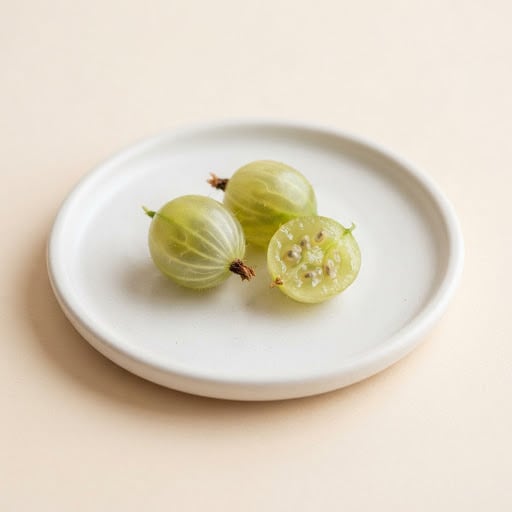
Babies can have gooseberries from about 6 months, cooked and mashed smooth at first, then lumpier mash at 7–8 months and quartered or small pieces from 9 months. Whole gooseberries are round and firm, like grapes, so they are a choking hazard. Gooseberries are very tart, so many families cook them soft or mix them with sweeter foods.
How to serve gooseberries by age
Shapes and textures change as your baby’s grasp and chewing grow.

6 months
Top and tail ripe gooseberries, then simmer them with a splash of water until they burst and soften, and blend or mash them smooth. Stir the puree into oatmeal, yogurt or ripe pear puree and offer it on a spoon or a preloaded spoon, with no added sugar.

7–8 months
Simmer gooseberries until soft and mash them more roughly so there are soft lumps but no whole berries, then stir into thicker oatmeal or yogurt. Keep raw gooseberries off the menu at this age, since even soft whole ones are round and firm.

9–12 months
Quarter soft, ripe gooseberries lengthwise, or serve small pieces of cooked gooseberry, for pincer-grasp practice. Mix with sweeter fruit if your baby finds them very sour.

12 months +
Toddlers can have quartered ripe gooseberries, gooseberry compote with no added sugar, or gooseberries baked into muffins. Keep cutting them until your child chews well, usually after age 4.
Why it’s good
Gooseberries are rich in vitamin C and fiber and add some vitamin A, potassium and plant antioxidants. Their vitamin C helps babies absorb iron from beans, grains and meat at the same meal. Gooseberries are low in calories and naturally tart, which builds a taste for sour flavors.
Safety notes
- Never serve whole gooseberries to babies or toddlers. Quarter, mash or cook them soft every time.
- Remove the dry stem and flower tips (top and tail) before serving.
- Do not add sugar or honey to gooseberry dishes for babies. Sweeten with banana, pear or apple instead, and no honey before 12 months.
- Gooseberry jam, pie filling and canned gooseberries in syrup are high in sugar; save them for occasional tastes after age 2.
- Wash fresh gooseberries well and check for mold, since soft berries spoil quickly.
A low-allergy food, still worth watching
Gooseberries are not a common allergen, and reactions are rare. Acidic fruit can cause a harmless red rash around the mouth, but watch for hives, vomiting or swelling, which can signal a true allergy.
Gooseberries for babies: questions parents ask
Quick answers about gooseberries for babies and toddlers.
When can babies have gooseberries?
Babies can have gooseberries from about 6 months, once they start solids. Gooseberries should be cooked and mashed, or quartered, never served whole.
Can babies have gooseberries?
Yes, babies can eat gooseberries when they are prepared safely. Gooseberries are tart, so cooking them or mixing them with sweeter fruit can help babies enjoy them.
Are gooseberries a choking hazard for babies?
Yes, gooseberries are a choking hazard for babies when served whole, because they are round and firm like a grape. Always mash, cook or quarter gooseberries before serving.
Are gooseberries a common allergen?
No, gooseberries are not a common allergen. Allergic reactions to gooseberries are rare, but offer a small amount the first time.
How do I serve gooseberries to a 6 month old?
To serve gooseberries to a 6 month old, simmer them in a little water until soft, then mash and mix them into oatmeal, yogurt or pear puree. Serve without added sugar.
Are gooseberries too sour for babies?
Gooseberries are sour, but many babies enjoy tart flavors, and early exposure helps them accept a wide range of tastes. If your baby makes a face, keep offering gooseberries mixed with sweeter foods.
Is Indian gooseberry (amla) the same as gooseberry?
No, Indian gooseberry (amla) is a different fruit from European gooseberries, though both are tart and rich in vitamin C. Amla can be offered the same way, cooked and mashed or finely grated, and never whole.
Can babies have frozen gooseberries?
Yes, babies can have frozen gooseberries once they are thawed and cooked or mashed. Frozen whole gooseberries are hard and a choking risk, so never serve them frozen.
Can gooseberries help with constipation in babies?
Gooseberries contain fiber, so mashed gooseberries may help soften stools. Offer gooseberries with water and other fiber-rich foods like oats, pears and prunes.
The takeaway
- Babies can have gooseberries from about 6 months, cooked and mashed smooth at first, then lumpier mash at 7–8 months and quartered or small pieces from 9 months.
- Top and tail ripe gooseberries, then simmer them with a splash of water until they burst and soften, and blend or mash them smooth.
- Choking risk is high. Not a Top 9 allergen, but offer a small amount first and watch for any reaction.
Read next


Sources
This guide follows current advice from these organizations.
- Starting Solid Foods American Academy of Pediatrics (HealthyChildren.org)
- When, What, and How to Introduce Solid Foods Centers for Disease Control and Prevention
- Choking Hazards Centers for Disease Control and Prevention
- Choking Prevention American Academy of Pediatrics (HealthyChildren.org)
- Foods and Drinks to Avoid or Limit Centers for Disease Control and Prevention
Track every new food in your baby’s passport
Track the first 100 foods and the Top 9 allergens. 7 days free.
More fruit for babies
Updated November 2026. Reviewed by our dietitians. Based on AAP, CDC and NIAID guidance. Written for healthy, full-term babies; not a substitute for your pediatrician. If your baby was born early, has a medical condition, feeding difficulties or a known allergy, check with them first (medical disclaimer). Always stay with your baby while they eat.