
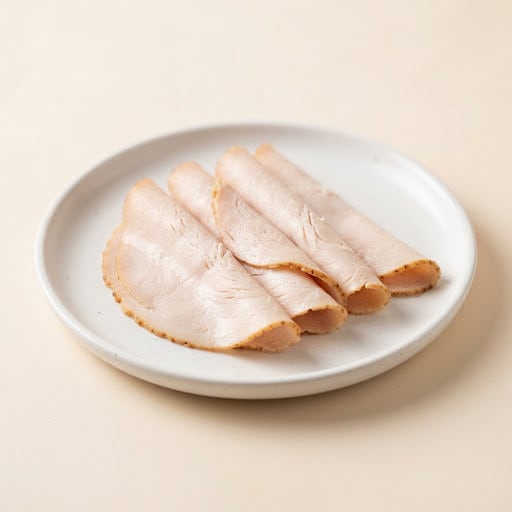
Protein Food Library
When can babies have deli meat?
Can babies have deli meat?
Deli meat is best saved until 12 months or later, and even then only as an occasional food heated until steaming. Cold cuts are high in sodium and can carry Listeria, a germ that is especially dangerous for young children. Thin slices can also clump in the mouth, so deli meat is a moderate choking risk.
How to serve deli meat by age
Shapes and textures change as your baby’s grasp and chewing grow.

6 months
Skip deli meat for now. Instead, cook chicken, turkey or beef at home until very tender and blend it with a little cooking water into a smooth puree, mixed with vegetables and offered on a spoon.

7–8 months
Keep skipping deli meat. Offer home-cooked chicken, turkey or beef minced finely into mashed vegetables, or slow-cooked meat so tender it falls apart when pressed between your fingers, with far less salt than cold cuts.

9–12 months
Keep waiting on deli meat. Serve home-roasted turkey or chicken, shredded or cut into small soft pieces, as a lower-sodium alternative to cold cuts.

12 months +
Choose low-sodium, nitrate-free sliced turkey or chicken, heat it until steaming hot, then cool and cut into small pieces or thin strips. Offer it occasionally, not daily, tucked into a soft wrap or alongside cheese and vegetables. Avoid thick chunks and rolled-up slices.
Why it’s good
Deli meat gives toddlers protein, iron, zinc and B vitamins, which support growth and brain development. However, most cold cuts are very high in sodium and many contain nitrites and other additives. Home-cooked meat provides the same nutrients without the extra salt.
Safety notes
- Heat deli meat until steaming hot (165 F) before serving to young children, then let it cool. This reduces the risk of Listeria, which can grow even in the fridge.
- Deli meat is high in sodium. Pick low-sodium versions and keep portions small and occasional.
- Thin slices can bunch up and stick in the throat. Cut meat into small pieces or narrow strips and never serve folded or rolled slices to young toddlers.
- Avoid processed meats like salami, pepperoni and bologna for young children, which are even higher in salt and fat, and hard sausage rounds are a choking hazard.
- Use opened packages within 3 to 5 days, keep them refrigerated, and throw out anything slimy or past the date.
A low-allergy food, still worth watching
Deli meat is not a common allergen, but some products contain added milk, soy, wheat or other allergens as binders or flavorings. Read the label, especially if your child has a known food allergy.
Deli meat for babies: questions parents ask
Quick answers about deli meat for babies and toddlers.
When can babies have deli meat?
Deli meat is best saved until 12 months or later because of its high sodium and the risk of Listeria. After 12 months, offer low-sodium deli meat occasionally, heated until steaming and cut into small pieces.
Can babies have deli meat?
Babies under 12 months should not eat deli meat. Home-cooked chicken, turkey and beef are better choices for babies because they give protein and iron without the added salt and preservatives.
Is deli meat a choking hazard for babies?
Yes, deli meat can be a choking hazard because thin, slippery slices can bunch together and stick in the throat. Cut deli meat into small pieces or thin strips and always stay with your child while they eat.
Is deli meat a common allergen?
Deli meat is not a common allergen, but some brands add milk, soy, wheat or other allergens. Always check the ingredient list before serving deli meat to a child with food allergies.
How do I serve deli meat to a 6 month old?
Deli meat should not be served to a 6 month old. Offer home-cooked chicken or beef blended into a smooth puree on a spoon instead, and wait on deli meat until after 12 months.
Why is deli meat a Listeria risk?
Deli meat can be contaminated with Listeria after cooking, and Listeria can keep growing in the fridge. Heating deli meat until steaming hot kills the germ, which is why it should be heated before serving to young children.
Is deli meat okay for toddlers?
Deli meat is okay for toddlers as an occasional food when it is low-sodium, heated until steaming and cut small. Because cold cuts are processed meats, home-cooked meats are better for everyday meals.
When can kids have sandwiches with deli meat?
Kids can have small sandwiches with heated, low-sodium deli meat after 12 months, cut into strips or small squares. Avoid thick stacks of meat, and use soft bread with a thin spread to help it slide down.
What is a good substitute for deli meat for babies?
A good substitute for deli meat is home-roasted chicken or turkey breast, sliced thin or shredded. Cook a batch, refrigerate it for up to 3 to 4 days, and use it in wraps, sandwiches and snack plates.
The takeaway
- Deli meat is best saved until 12 months or later, and even then only as an occasional food heated until steaming.
- Choose low-sodium, nitrate-free sliced turkey or chicken, heat it until steaming hot, then cool and cut into small pieces or thin strips.
- Choking risk is medium. Not a Top 9 allergen, but offer a small amount first and watch for any reaction.
Read next


Sources
This guide follows current advice from these organizations.
- Starting Solid Foods American Academy of Pediatrics (HealthyChildren.org)
- When, What, and How to Introduce Solid Foods Centers for Disease Control and Prevention
- Choking Hazards Centers for Disease Control and Prevention
- Choking Prevention American Academy of Pediatrics (HealthyChildren.org)
- Foods and Drinks to Avoid or Limit Centers for Disease Control and Prevention
- Preventing Listeria Infection Centers for Disease Control and Prevention
- Iron Centers for Disease Control and Prevention
Track every new food in your baby’s passport
Track the first 100 foods and the Top 9 allergens. 7 days free.
More protein foods for babies


Updated November 2026. Reviewed by our dietitians. Based on AAP, CDC and NIAID guidance. Written for healthy, full-term babies; not a substitute for your pediatrician. If your baby was born early, has a medical condition, feeding difficulties or a known allergy, check with them first (medical disclaimer). Always stay with your baby while they eat.