
Nuts & seeds Food Library
When can babies have chestnuts?
Can babies have chestnuts?
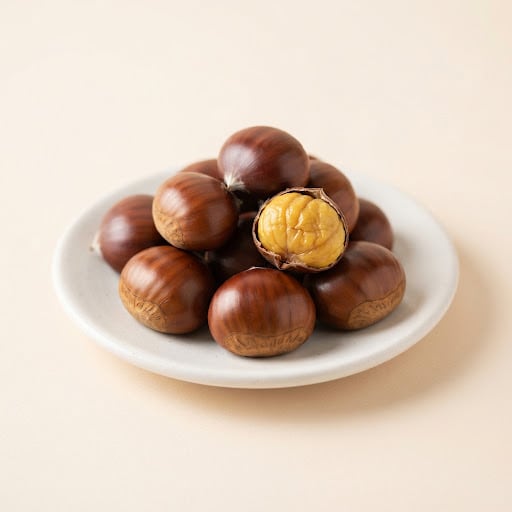
Babies can have chestnuts from about 6 months when they are cooked, peeled and mashed or pureed. Whole and chopped chestnuts are firm and a choking hazard, so serve them smooth for babies and in thin, soft pieces for older toddlers. Never serve raw chestnuts or horse chestnuts, which are toxic.
How to serve chestnuts by age
Shapes and textures change as your baby’s grasp and chewing grow.

6 months
Roast or boil chestnuts until tender, peel off the shell and the thin bitter inner skin, then blend them with breast milk, formula or water into a smooth puree. Stir it into oatmeal, smooth sweet potato or yogurt and offer it on a spoon.

7–8 months
Mash cooked, peeled chestnuts more thickly with a fork, making sure no firm bits remain, and mix them into mashed sweet potato, squash or oatmeal. You can also spread chestnut puree thinly on soft toast strips for baby to hold.

9–12 months
Keep serving mashed chestnut or chestnut puree mixed into soft foods, or bake chestnut flour into soft pancakes or muffins. Avoid chopped chestnut pieces, which stay firm.

12 months +
Toddlers can have mashed chestnuts, chestnut soup and baked goods made with chestnut flour. Smash cooked chestnuts flat or slice them very thinly until about age 3, and wait until age 4 for whole roasted chestnuts.
Why it’s good
Chestnuts are starchier and lower in fat than most nuts, giving babies carbohydrates for energy plus fiber, vitamin C, vitamin B6, folate, potassium and copper. They are naturally gluten free and their mild, sweet flavor makes them an easy first nut-like food.
Safety notes
- Whole, halved and chopped chestnuts are firm and can block a small airway. Mash, puree or flatten cooked chestnuts for babies and toddlers.
- Always cook chestnuts. Raw chestnuts are hard and contain tannins that can upset the stomach.
- Never serve horse chestnuts (conkers), which look similar but are poisonous. Buy edible chestnuts from a store.
- Peel off both the hard shell and the thin brown inner skin, which is bitter and papery.
- Skip candied chestnuts and sweetened chestnut paste (creme de marrons) before age 2, since they are very high in added sugar.
A low-allergy food, still worth watching
Chestnuts are not usually counted as a common tree nut allergen, but reactions do happen, and people with a latex allergy can react to chestnut. If your baby has a known tree nut or latex allergy, ask your pediatrician before offering chestnut, and watch for hives, vomiting, swelling or wheezing.
Chestnuts for babies: questions parents ask
Quick answers about chestnuts for babies and toddlers.
When can babies have chestnuts?
Babies can have chestnuts from about 6 months when they are cooked, peeled and mashed or pureed. Whole chestnuts should wait until a child chews very well, usually around age 4.
Can babies have chestnuts?
Yes, babies can eat chestnuts that are fully cooked and served as a smooth puree or mash. Chestnuts are soft and starchy once cooked, but they still need to be mashed to be safe for babies.
Are chestnuts a choking hazard for babies?
Yes, whole and chopped chestnuts are a choking hazard for babies because they are firm and round. Mash, puree or flatten cooked chestnuts to make them safe for young children.
Are chestnuts a common allergen?
Chestnuts are not usually considered a common allergen, even though they are a tree nut by name. Reactions are possible, especially in people with latex allergy, so start with a small amount.
How do I serve chestnuts to a 6 month old?
To serve chestnuts to a 6 month old, roast or boil them until tender, peel off the shell and inner skin, and blend them into a smooth puree. Mix the chestnut puree into oatmeal, yogurt or smooth vegetable puree and offer it on a spoon.
Can babies have chestnut flour?
Yes, chestnut flour is a great way to serve chestnuts to babies in pancakes, muffins and soft breads. Chestnut flour is gluten free and has a gentle sweet flavor.
When can babies have sweetened chestnut paste?
Sweetened chestnut paste and candied chestnuts are best saved until after age 2 because they are high in added sugar. Unsweetened chestnut puree is a better choice for babies and toddlers.
Are vacuum-packed or jarred chestnuts okay for babies?
Yes, plain, pre-cooked vacuum-packed or jarred chestnuts are fine for babies once mashed or pureed. Check the label for added salt or sugar and choose plain chestnuts.
Are horse chestnuts safe for babies?
No, horse chestnuts (conkers) are poisonous and should never be eaten. Only serve edible sweet chestnuts bought from a grocery store.
The takeaway
- Babies can have chestnuts from about 6 months when they are cooked, peeled and mashed or pureed.
- Roast or boil chestnuts until tender, peel off the shell and the thin bitter inner skin, then blend them with breast milk, formula or water into a smooth puree.
- Choking risk is medium. Not a Top 9 allergen, but offer a small amount first and watch for any reaction.
Read next



Sources
This guide follows current advice from these organizations.
- Starting Solid Foods American Academy of Pediatrics (HealthyChildren.org)
- When, What, and How to Introduce Solid Foods Centers for Disease Control and Prevention
- Choking Hazards Centers for Disease Control and Prevention
- Choking Prevention American Academy of Pediatrics (HealthyChildren.org)
- Foods and Drinks to Avoid or Limit Centers for Disease Control and Prevention
- Dietary Guidelines for Americans, 2020-2025 U.S. Department of Agriculture and HHS
Track every new food in your baby’s passport
Track the first 100 foods and the Top 9 allergens. 7 days free.
More nuts and seeds for babies
Updated November 2026. Reviewed by our dietitians. Based on AAP, CDC and NIAID guidance. Written for healthy, full-term babies; not a substitute for your pediatrician. If your baby was born early, has a medical condition, feeding difficulties or a known allergy, check with them first (medical disclaimer). Always stay with your baby while they eat.