
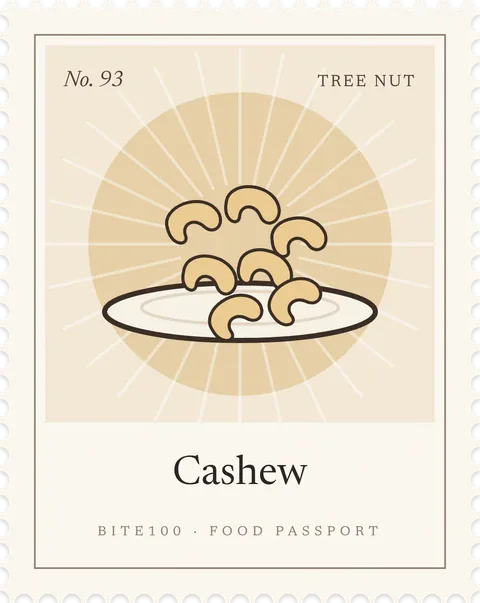
No. 93 · Nuts & seeds Passport food
When can babies have cashews?
Can babies eat cashews?
Babies can have cashews from about 6 months, but only as smooth cashew butter thinned out or as finely ground cashews mixed into food, never whole or in pieces. Cashew is a tree nut, one of the Top 9 allergens, so introduce it early on its own and keep offering it regularly.
How to serve cashews by age
Shapes and textures change as your baby’s grasp and chewing grow.

6 months
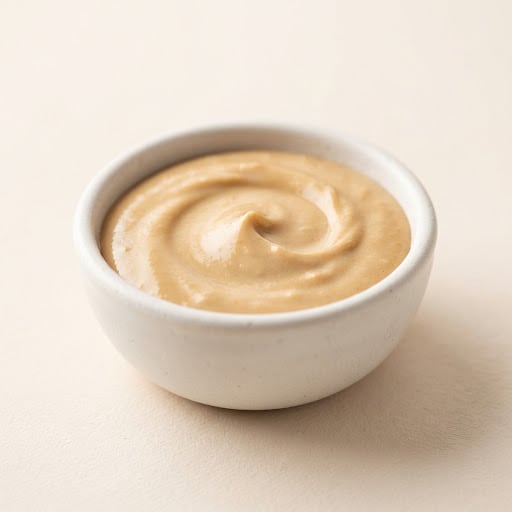
Stir about a quarter to half a teaspoon of smooth cashew butter into warm oatmeal, plain yogurt or smooth fruit puree, or thin it with warm water, breast milk or formula until it is runny. You can also grind unsalted cashews to a fine powder and mix it into purees, then offer it on a spoon. Never offer a spoonful of thick nut butter on its own.

7–8 months
Keep stirring thinned cashew butter or finely ground cashew into thicker, lumpier foods like fork-mashed banana, oatmeal or mashed sweet potato. You can also roll soft, slippery foods like ripe banana or avocado in ground cashew for grip, or spread cashew butter in a thin, see-through layer on a soft toast strip.

9–12 months
Spread a very thin layer of cashew butter on toast fingers or soft pancake strips, or mix finely ground cashew into muffins, meatballs or oatmeal. A good rule: the layer should be thin enough that you can see the toast through it.

12 months +
Keep using thin spreads, ground cashews and cashew butter in baking and sauces, like a mild curry or a creamy pasta sauce. Whole and chopped cashews stay a choking hazard until at least age 4, so hold off on trail mix and nut clusters.
Why it’s good
Cashews give babies healthy fats, plant protein, iron, zinc, magnesium and copper. Cashews are among the more iron-rich nuts, and pairing cashew butter with a vitamin C food like strawberries or kiwi helps the body absorb that iron. The soft, mild taste makes cashew one of the easiest tree nuts to introduce.
Safety notes
- Never serve whole cashews, halves or chopped pieces to babies and toddlers. Whole nuts are a leading choking hazard and are not safe until at least age 4.
- Thick nut butter can stick to the roof of the mouth and block the airway. Always thin cashew butter, mix it into food, or spread it very thinly.
- Choose cashew butter made only from cashews, or cashews and oil, with no added salt, sugar or honey. Check the label, since some brands are processed with peanuts or other tree nuts.
- Cashew allergy can cause stronger reactions than some other tree nuts. Introduce a small amount first, on a morning when baby is well, and stay close for two hours afterward.
- Always seat baby upright and stay within arm's reach while they eat.
Introduce cashew on its own, then keep it in
Cashew is a tree nut, one of the Top 9 food allergens, and cashew allergy often comes together with pistachio allergy because the two nuts are closely related. Watch for hives, swelling, vomiting, coughing or unusual sleepiness, and talk to your pediatrician before introducing cashew if your baby has severe eczema, egg allergy or peanut allergy.
Cashews for babies: questions parents ask
Quick answers about cashews for babies and toddlers.
When can babies have cashews?
Babies can have cashews from about 6 months, once they are ready for solids, in the form of thinned cashew butter or finely ground cashews. Whole and chopped cashews are not safe until at least age 4 because of the choking risk.
Can babies eat cashews?
Yes, babies can eat cashews when they are prepared safely, as a smooth butter thinned into food or as a fine powder. Early and regular exposure to tree nuts like cashew may help lower the chance of developing a tree nut allergy.
Are cashews a choking hazard for babies?
Yes, cashews are a high choking hazard for babies and young children when served whole, halved or chopped. Thick globs of cashew butter are also a risk, so always thin cashew butter or mix it into food.
Are cashews a common allergen?
Yes, cashews are a common allergen because they are a tree nut, one of the Top 9 food allergens. Cashew and pistachio allergies often go together, and a cashew allergy does not always mean a child is allergic to every tree nut, so an allergist can help sort out which nuts are safe.
How do I serve cashews to a 6 month old?
To serve cashews to a 6 month old, stir a small amount of smooth cashew butter into oatmeal or yogurt, or thin it with warm water until runny. Finely ground unsalted cashews mixed into a puree also work well.
Can babies drink cashew milk?
Cashew milk is fine as a cooking ingredient in small amounts, but it should not replace breast milk or formula before 12 months. Even after 12 months, cashew milk is low in protein and many brands have added sugar, so it is not a good main drink unless your pediatrician or dietitian recommends a fortified version.
How often should babies eat cashews after the first taste?
Once cashew is tolerated, babies should have cashew a few times a week, or at least once a week, to help keep the tolerance going. Stirring cashew butter into breakfast is an easy way to keep it in the routine.
Are raw cashews safe for babies?
The cashews sold as raw in stores have already been steamed or heat-treated to remove a skin irritant from the shell, so they are safe once ground finely. Choose unsalted cashews, and grind them in a blender until they look like flour.
Can I make my own cashew butter for my baby?
Yes, homemade cashew butter is easy: blend unsalted cashews in a food processor for several minutes until smooth and runny. Homemade cashew butter has no added salt or sugar, but it still needs to be thinned or mixed into food for babies.
If my baby is allergic to peanuts, can they have cashews?
Peanuts are legumes, not tree nuts, but many children with peanut allergy are also allergic to one or more tree nuts. If your baby has a peanut allergy, ask your pediatrician or allergist before introducing cashews.
Are cashews good for toddlers?
Yes, cashews are a nutritious food for toddlers 12 months and older, giving healthy fats, protein, iron, zinc and magnesium. Serve them as thinly spread cashew butter or ground cashews in baking and sauces; whole and chopped cashews stay a choking hazard until at least age 4.
The takeaway
- Babies can have cashews from about 6 months, but only as smooth cashew butter thinned out or as finely ground cashews mixed into food, never whole or in pieces.
- Stir about a quarter to half a teaspoon of smooth cashew butter into warm oatmeal, plain yogurt or smooth fruit puree, or thin it with warm water, breast milk or formula until it is runny.
- Choking risk is high. Tree nut is one of the Top 9 allergens: offer a small amount first, watch for a reaction, then keep it in the diet regularly.
Read next


Sources
This guide follows current advice from these organizations.
- Starting Solid Foods American Academy of Pediatrics (HealthyChildren.org)
- When, What, and How to Introduce Solid Foods Centers for Disease Control and Prevention
- Choking Hazards Centers for Disease Control and Prevention
- Choking Prevention American Academy of Pediatrics (HealthyChildren.org)
- Peanut Allergy: What to Know About the Latest Prevention Guidelines American Academy of Pediatrics (HealthyChildren.org)
- Foods and Drinks to Avoid or Limit Centers for Disease Control and Prevention
- Iron Centers for Disease Control and Prevention
- The Effects of Early Nutritional Interventions on the Development of Atopic Disease in Infants and Children Greer FR, Sicherer SH, Burks AW; American Academy of Pediatrics. Pediatrics. 2019;143(4):e20190281
Stamp cashew in your baby’s passport
Track the first 100 foods and the Top 9 allergens. 7 days free.
More nuts and seeds for babies
Updated November 2026. Reviewed by our dietitians. Based on AAP, CDC and NIAID guidance. Written for healthy, full-term babies; not a substitute for your pediatrician. If your baby was born early, has a medical condition, feeding difficulties or a known allergy, check with them first (medical disclaimer). Always stay with your baby while they eat.