
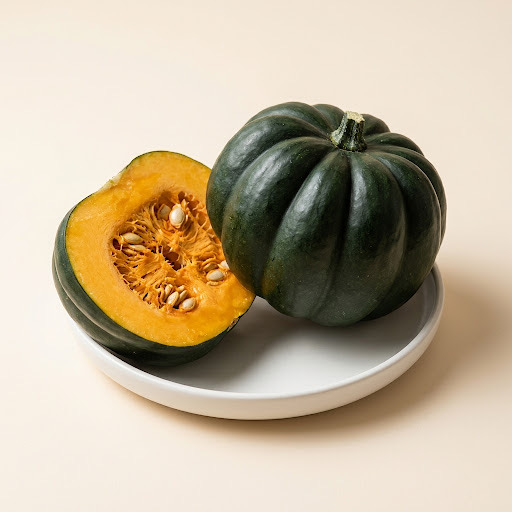
Veggies Food Library
When can babies have acorn squash?
Can babies have acorn squash?
Babies can have acorn squash from about 6 months, when they start solid food. Roast or steam it until very soft, start with a smooth mash on a spoon, then offer lumpier mash and large soft wedges with the skin removed at 7–8 months. Raw acorn squash is hard and is a choking risk, so always cook it well.
How to serve acorn squash by age
Shapes and textures change as your baby’s grasp and chewing grow.

6 months
Roast or steam acorn squash until a fork slides in easily, then scoop out the flesh and blend or mash it until smooth. Thin it with a little breast milk, formula or water and offer it on a spoon or a pre-loaded spoon your baby can hold.

7–8 months
Fork-mash soft acorn squash so it has small lumps, or stir it into oatmeal or lentils. You can also offer large soft wedges about the size of two adult fingers with the skin peeled off, as long as the flesh squashes easily between your thumb and finger.

9–12 months
Cut soft, roasted acorn squash into small bite-size cubes for pincer grasp practice, or mash it and spread it on toast strips. You can also stir mashed squash into oatmeal, pasta or lentils.

12 months +
Toddlers can eat roasted acorn squash cubes, half-moons with the skin on once they chew well, or stuffed acorn squash with rice, beans and cheese. Let your toddler use a spoon to scoop squash straight from a roasted half.
Why it’s good
Acorn squash gives babies fiber, vitamin C, potassium, magnesium and B vitamins, plus some vitamin A from carotenoids. Its mild, nutty, slightly sweet flavor makes acorn squash an easy first vegetable. The fiber helps support regular bowel movements as babies start solids.
Safety notes
- Never serve raw or undercooked acorn squash. Hard pieces can easily break off and be choked on. Cook until very soft.
- Remove the skin for babies under 12 months. Roasted acorn squash skin is tough and can come off in chewy strips that are hard to swallow.
- Scoop out all seeds before cooking. Roasted whole squash seeds are a choking hazard for children under 4, though they can be finely ground and sprinkled on food.
- Do not add salt, sugar, maple syrup or honey when cooking acorn squash for babies. Use a little olive oil, butter or cinnamon for flavor.
- Acorn squash is hard to cut. Microwave the whole squash for 2 to 3 minutes to soften it slightly before cutting with a sharp knife.
A low-allergy food, still worth watching
Acorn squash is not a common allergen and is not one of the Top 9 allergens. Allergic reactions are rare, but some adults get itchy hands from handling raw squash, so wash up after cutting and watch your baby for any rash the first few times.
Acorn squash for babies: questions parents ask
Quick answers about acorn squash for babies and toddlers.
When can babies have acorn squash?
Babies can have acorn squash from about 6 months, as soon as they are ready for solid food. Acorn squash should be cooked until very soft and served as a smooth mash at first, with large soft wedges without the skin from about 7–8 months.
Can babies have acorn squash?
Yes, babies can eat acorn squash. Acorn squash is a nutritious, mild first vegetable that is easy to roast, steam or mash. Always cook it well and remove the seeds and tough skin for younger babies.
Is acorn squash a choking hazard for babies?
Cooked, soft acorn squash is a low choking risk for babies. Raw acorn squash, tough skin and whole roasted seeds are choking hazards, so cook the flesh until it squashes easily and remove the skin and seeds.
Is acorn squash a common allergen?
Acorn squash is not a common allergen and is not one of the Top 9 food allergens. Reactions to acorn squash are rare, but watch your baby the first few times as with any new food.
How do I serve acorn squash to a 6 month old?
To serve acorn squash to a 6 month old, roast or steam it until soft, scoop the flesh away from the skin and blend or mash it until smooth. Offer it on a spoon or a pre-loaded spoon. Large soft wedges to hold can follow at 7–8 months.
Can babies have acorn squash skin?
Babies under 12 months should not eat acorn squash skin because it stays tough and chewy after cooking. Toddlers who chew well can try the soft, thin skin of well-roasted acorn squash, cut into small pieces.
How do I make acorn squash puree for a baby?
To make acorn squash puree, cut the squash in half, scoop out the seeds, and roast cut side down at 400°F (about 200°C) for 35 to 45 minutes until very soft. Scoop out the flesh and mash or blend it with a little breast milk, formula or water until smooth.
Can I freeze acorn squash for my baby?
Yes, cooked acorn squash freezes well. Mash or puree it, freeze it in ice cube trays, then store the cubes in a freezer bag for up to about 3 months and thaw in the fridge before serving.
Is acorn squash good for constipation in babies?
Acorn squash contains fiber, which can help keep a baby's stools soft. Serving acorn squash alongside water and other high-fiber foods like pears and prunes can help babies with mild constipation.
The takeaway
- Babies can have acorn squash from about 6 months, when they start solid food.
- Roast or steam acorn squash until a fork slides in easily, then scoop out the flesh and blend or mash it until smooth.
- Choking risk is low. Not a Top 9 allergen, but offer a small amount first and watch for any reaction.
Read next


Sources
This guide follows current advice from these organizations.
- Starting Solid Foods American Academy of Pediatrics (HealthyChildren.org)
- When, What, and How to Introduce Solid Foods Centers for Disease Control and Prevention
- Choking Hazards Centers for Disease Control and Prevention
- Foods and Drinks to Avoid or Limit Centers for Disease Control and Prevention
Track every new food in your baby’s passport
Track the first 100 foods and the Top 9 allergens. 7 days free.
More vegetables for babies
Updated November 2026. Reviewed by our dietitians. Based on AAP, CDC and NIAID guidance. Written for healthy, full-term babies; not a substitute for your pediatrician. If your baby was born early, has a medical condition, feeding difficulties or a known allergy, check with them first (medical disclaimer). Always stay with your baby while they eat.