
Food throwing at the table
What it means at each age, and calm, practical ways to respond.
Quick answer
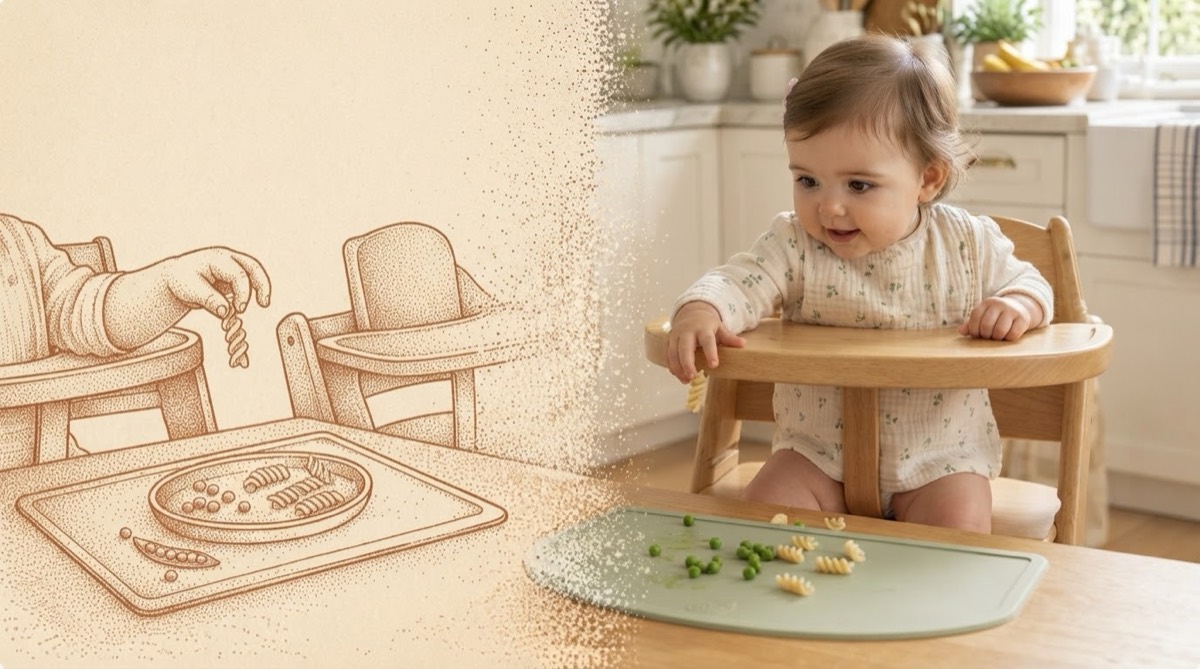
Food throwing is a normal stage that usually starts around 8–10 months and peaks between 12 and 18 months. Babies drop food to explore and to learn cause and effect; older babies often throw food to say “I’m done” or to see your reaction. The best response is calm and boring: serve small portions, stay neutral, teach a sign or phrase for “all done”, and end the meal if throwing continues after a reminder.
- Food throwing usually starts around 8–10 months
- It is exploring, communicating or a sign baby is full
- Respond calmly, serve small portions, teach “all done”

STEP 1
Why do babies throw food?
| Age | What’s going on |
|---|---|
| 6–8 months | Mostly accidental. Baby is learning to open their hand and explore food. |
| 8–12 months | Science time: watching things fall, learning that objects still exist out of sight, testing what you do next. |
| 12–18 months | Communication: “I’m full”, “I don’t want this”, or “watch me”. Also testing limits. |
| 18 months + | More deliberate. Boredom, too long at the table, or seeking attention. |
STEP 2
Does throwing food mean baby is full?
Often, yes, especially if baby has eaten well and starts throwing after a while. Other “done” signs include turning away, pushing food off the tray, arching back and trying to climb out.
Throwing at the start of a meal is more likely curiosity, not being hungry yet, or a food baby isn’t sure about.

STEP 3
How to stop a baby from throwing food
- 1Serve small amounts. Put 2 or 3 pieces on the tray at a time and add more when they are eaten.
- 2Stay neutral. No laughing, gasping or big “no!”. A big reaction can make it a game.
- 3Say what to do, not what not to do. “Food stays on the table” or “Keep it on your plate”.
- 4Offer a “no thank you” spot. A small bowl or the edge of the tray where baby can put food they don’t want.
- 5Teach “all done”. Say and sign it (hands open, turning side to side) each time a meal ends.
- 6End the meal kindly. If throwing continues after one calm reminder, say “Looks like you’re all done” and take baby out of the chair.
- 7Don’t serve the dropped food back. Clean up after the meal, not during it.
STEP 4
What a calm response looks like
Here is a typical moment at the table, and one calm way through it.
- 1Baby drops a piece of broccoli over the side and watches you.
- 2You stay relaxed: “Broccoli is on the floor. Food stays on the tray.”
- 3Baby throws another piece. You point to the side bowl: “If you don’t want it, put it here.”
- 4Baby throws again and pushes the tray. “Looks like you’re all done.” You sign all done and lift baby out.
- 5You clean up after baby is playing, without comment.
Consistency is what works. Doing the same calm thing each time teaches baby that throwing doesn’t lead to anything exciting.

STEP 5
Ways to cut down food throwing
- Keep meals to about 15 to 20 minutes, so baby isn’t bored
- Time meals so baby is hungry but not overtired
- Eat with baby and model putting food you don’t want on the side of your plate
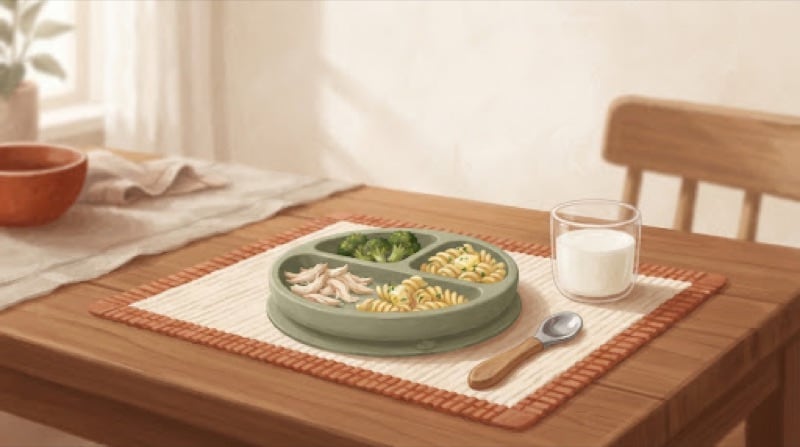
- Use a suction plate or serve food straight on the tray
- Praise what you want to see: “You put the pasta in your bowl!”
- Put a splat mat under the high chair so you can stay relaxed
STEP 6
How to teach baby to say “all done”
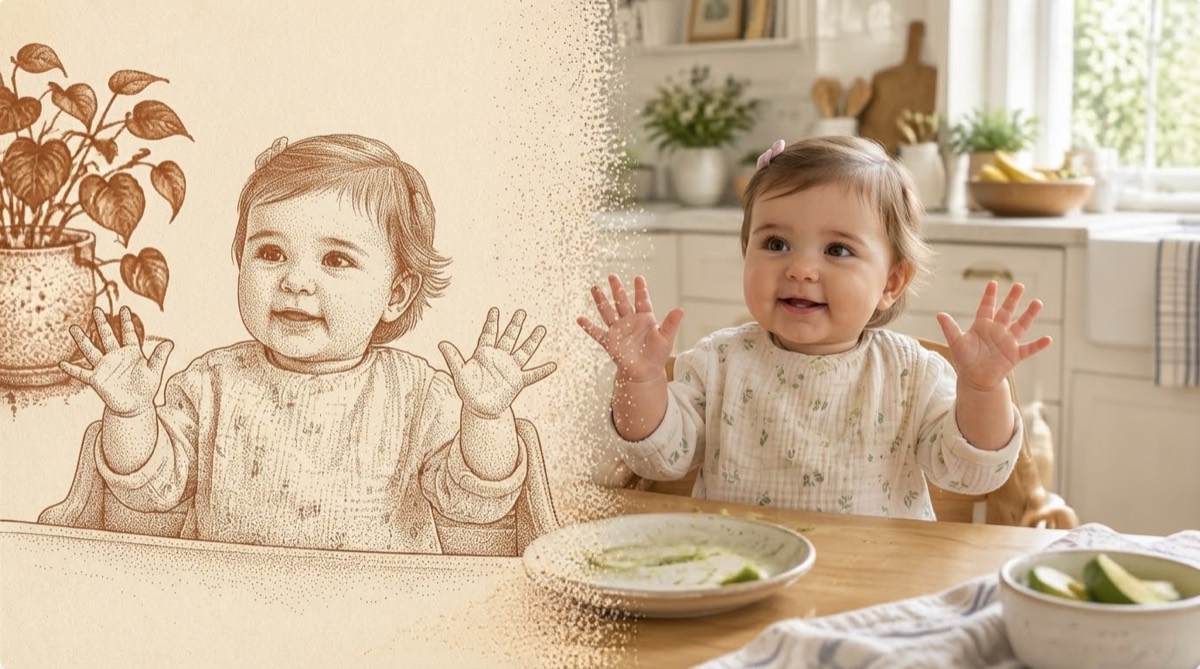
Giving baby a clear way to say “I’m finished” is one of the most effective ways to cut down throwing. Many babies can learn a simple sign by 9–12 months, long before they can say the words.
- 1Show the sign. Hold both hands up, palms facing you, and twist them outward a few times.
- 2Say it every time. At the end of each meal, sign and say “all done” before lifting baby out.
- 3Respond when baby tries. If baby waves their hands or copies you, treat it as the real thing and end the meal.
- 4Add “more”. Tap your fingertips together for “more”, so baby can ask for food too.
Most babies start copying within 2 to 6 weeks of daily practice. Once they can ask to be done, there is less reason to throw.

STEP 7
When food throwing is worth a closer look
Throwing is almost always a phase. Talk to your pediatrician if throwing happens with almost every food and baby eats very little, gags or vomits often, seems distressed by certain textures, or isn’t growing well. See when baby refuses food.
AVOID THESE
Common mistakes to avoid
- Laughing or reacting big, which makes throwing a game
- Piling the whole meal on the tray at once
- Giving thrown food back
- Keeping baby in the high chair long after they’ve finished
- Punishing or scolding, which raises stress around meals
GET HELP
When to call your pediatrician
Throwing is almost always a phase. Mention it to your pediatrician if:
- Baby throws almost every food and eats very little
- Throwing comes with gagging, vomiting or distress at certain textures
- Baby isn’t gaining weight as expected
- Your toddler has few words or gestures to communicate by 15–18 months
Baby throwing food: questions parents ask
Why does my baby throw food on the floor?
Babies throw food to explore, to learn cause and effect, to see your reaction, or to tell you they are done eating. It is a normal stage that usually starts around 8–10 months.
At what age do babies start throwing food?
Many babies start dropping or throwing food around 8–10 months. It often peaks between 12 and 18 months and fades as toddlers learn other ways to communicate.
Does throwing food mean my baby is full?
Often. If baby has eaten a fair amount and then starts throwing, they are probably done. Throwing at the start of a meal is more likely curiosity or not being hungry yet.
Should I say no when my baby throws food?
Keep it short and calm. Say what you want instead, like “food stays on the table”. A big reaction, even a laugh or a loud “no”, can turn throwing into a game.
Should I give the food back after baby throws it?
No. Giving it back can turn throwing into a fetch game. Clean up after the meal.
How do I teach my baby to say “all done”?
Say and sign “all done” (open hands, turning side to side) at the end of every meal. Many babies start using the sign within a few weeks, which often cuts down throwing.
How long does the food throwing phase last?
It varies, but most toddlers throw much less by about 18–24 months, especially when responses are calm and consistent.
Should I end the meal when baby throws food?
If throwing continues after one calm reminder, yes. Say “Looks like you’re all done”, and take baby out of the high chair. They can eat again at the next planned meal or snack.
Is food throwing a sign of a behavior problem?
No. Throwing food is a normal developmental stage for babies and young toddlers. It reflects curiosity, cause-and-effect learning and limited ways to communicate, not bad behavior.
Do suction plates stop food throwing?
They help a little, because the plate itself can’t be flung, but babies can still throw the food. Small portions, calm responses and teaching “all done” make the bigger difference.
Keep reading
 When baby refuses food
 9-month-old feeding schedule
 12–14-month-old feeding schedule
Recipe collectionsToddler meals for picky eaters
- AAP (HealthyChildren.org): Starting solid foods
- Ellyn Satter Institute: The division of responsibility in feeding
- AAP (HealthyChildren.org): Feeding and nutrition for your 1-year-old
This guide is written for healthy, full-term babies and doesn’t replace your pediatrician. If your baby was born early, has a medical condition, feeding or swallowing difficulties, or a known allergy, check with them first (medical disclaimer). Reviewed by our dietitians.