
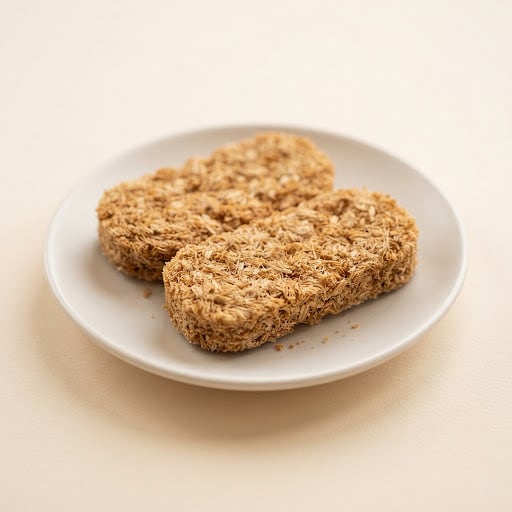
Grains Food Library
When can babies have Weetabix?
Can babies have Weetabix?
Babies can have Weetabix from about 6 months, soaked in breast milk or formula until soft and mushy. Dry Weetabix is crumbly and can be a choking hazard, so never offer it dry to babies. Weetabix is made from whole wheat, so it is a wheat allergen, and original Weetabix is fortified with iron.
How to serve Weetabix by age
Shapes and textures change as your baby’s grasp and chewing grow.

6 months
Crumble a biscuit into a bowl and soak it in warm breast milk or formula until it turns into a soft porridge, then stir until smooth with no dry bits. Serve it on a spoon or a pre-loaded spoon, and stir in smooth fruit puree for flavor.

7–8 months
Make Weetabix porridge a little thicker so it holds together, and stir in mashed banana, yogurt or lumpier fruit. Your baby can scoop the thick porridge with hands or a pre-loaded spoon.

9–12 months
Offer Weetabix porridge thicker, mixed with yogurt, mashed banana or grated apple. Babies can also have Weetabix mixed into soft pancakes or muffins made without added sugar.

12 months +
Toddlers can have Weetabix with whole cow's milk, either soaked soft or slightly firmer as they chew better. Avoid flavored or chocolate versions, which have more sugar.
Why it’s good
Original Weetabix gives babies whole grain carbohydrates, fiber and fortified iron, B vitamins and folic acid. Iron is important from 6 months as babies' iron stores run low. Serve it with a vitamin C food like berries or kiwi to help absorption.
Safety notes
- Never give dry Weetabix to babies. Dry biscuit can crumble into dry pieces that are hard to swallow; soak it until soft.
- Weetabix contains wheat. If your baby has not had wheat yet, start with a small amount and watch for a reaction.
- Choose original Weetabix. Flavored versions such as chocolate, banana or protein varieties contain more sugar or other ingredients.
- Original Weetabix contains a little salt and sugar. That is fine in normal portions, but it counts toward your baby's daily totals.
- Do not use cow's milk as a main drink before 12 months. A small amount of cow's milk mixed into cereal is generally fine from 6 months, but breast milk or formula is a better choice.
Introduce weetabix on its own, then keep it in
Weetabix is made from whole wheat, which is one of the Top 9 allergens. Introduce a small amount, watch for hives, vomiting, swelling or wheezing, and keep wheat in the diet once tolerated; check labels on other varieties for oats, barley, milk or nuts.
Weetabix for babies: questions parents ask
Quick answers about Weetabix for babies and toddlers.
When can babies have Weetabix?
Babies can have Weetabix from about 6 months of age, soaked in breast milk or formula until soft. Weetabix should never be served dry to babies.
Can babies have Weetabix?
Yes, babies can eat original Weetabix soaked into a soft porridge. Weetabix is a whole wheat cereal that is fortified with iron and B vitamins.
Is Weetabix a choking hazard for babies?
Dry Weetabix can be a choking hazard for babies because it breaks into dry, crumbly pieces. Soak Weetabix until fully soft and mushy, and stay with your baby while eating.
Is Weetabix a common allergen?
Yes, Weetabix contains a common allergen because it is made from wheat. Introduce wheat in a small amount first and watch for signs of an allergic reaction.
How do I serve Weetabix to a 6 month old?
To serve Weetabix to a 6 month old, crumble a biscuit and soak it in warm breast milk or formula until it becomes a soft, smooth porridge with no dry bits. Offer it on a spoon or a pre-loaded spoon.
Can I mix Weetabix with cow's milk for my baby?
A small amount of whole cow's milk can be used in Weetabix from 6 months, but cow's milk should not be a main drink until 12 months. Breast milk or formula is the best liquid for Weetabix for babies under 1.
How much Weetabix can a baby have?
Half a biscuit to one biscuit of Weetabix is usually plenty for a baby under 12 months, depending on appetite. Follow your baby's hunger cues and serve Weetabix alongside fruit or other foods.
Can Weetabix help with baby constipation?
Weetabix contains whole grain fiber, which can help some babies with constipation. Serve Weetabix with fruits like pear or prunes and offer fluids, and see your pediatrician if constipation continues.
Is Weetabix high in sugar and salt for babies?
Original Weetabix is relatively low in sugar and salt compared with many breakfast cereals. Flavored Weetabix varieties have more sugar, so stick with original Weetabix for babies and toddlers.
The takeaway
- Babies can have Weetabix from about 6 months, soaked in breast milk or formula until soft and mushy.
- Crumble a biscuit into a bowl and soak it in warm breast milk or formula until it turns into a soft porridge, then stir until smooth with no dry bits.
- Choking risk is medium. Wheat is one of the Top 9 allergens: offer a small amount first, watch for a reaction, then keep it in the diet regularly.
Read next


Sources
This guide follows current advice from these organizations.
- Starting Solid Foods American Academy of Pediatrics (HealthyChildren.org)
- When, What, and How to Introduce Solid Foods Centers for Disease Control and Prevention
- Choking Hazards Centers for Disease Control and Prevention
- Choking Prevention American Academy of Pediatrics (HealthyChildren.org)
- Iron Centers for Disease Control and Prevention
- The Effects of Early Nutritional Interventions on the Development of Atopic Disease in Infants and Children Greer FR, Sicherer SH, Burks AW; American Academy of Pediatrics. Pediatrics. 2019;143(4):e20190281
Track every new food in your baby’s passport
Track the first 100 foods and the Top 9 allergens. 7 days free.
More grains for babies
Updated November 2026. Reviewed by our dietitians. Based on AAP, CDC and NIAID guidance. Written for healthy, full-term babies; not a substitute for your pediatrician. If your baby was born early, has a medical condition, feeding difficulties or a known allergy, check with them first (medical disclaimer). Always stay with your baby while they eat.