
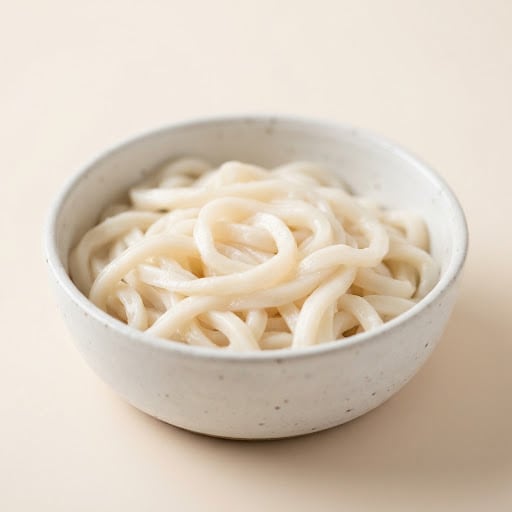
Grains Food Library
When can babies have udon noodles?
Can babies have udon noodles?
Babies can have udon noodles from about 6 months, cooked very soft and mashed smooth at first, then as whole soft noodles to grab from 7–8 months. Udon noodles are thick and easy for little hands to hold, which makes them a great first noodle once your baby is ready for pieces. Udon is made from wheat, a common allergen, and some packaged udon is salted, so rinse it after cooking.
How to serve udon noodles by age
Shapes and textures change as your baby’s grasp and chewing grow.

6 months
Cook udon until very soft, chop it, and blend or mash it with a little unsalted broth, vegetable puree or mashed avocado into a smooth, loose mash. Offer it on a spoon, since whole noodles come a little later.

7–8 months
Cook udon until very soft and offer a few long noodles your baby can grab with a whole fist, or chop them finely into lumpy vegetable mash. The thick shape is easy to hold; toss with a little unsalted butter, olive oil or a smear of mashed avocado.

9–12 months
Cut udon into pieces about 1 inch long so your baby can pick them up with thumb and finger. Mix with soft vegetables, flaked salmon, shredded chicken or tofu cubes.

12 months +
Toddlers can have udon in a mild noodle soup or stir-fry with vegetables and protein. Use low-sodium soy sauce sparingly or skip it, and cut the noodles if your toddler stuffs too many in at once.
Why it’s good
Udon noodles give babies carbohydrates for energy and a small amount of protein. They are low in fiber and iron, so pair them with iron-rich foods like beef, chicken, tofu, egg or lentils and some vegetables to round out the meal.
Safety notes
- Cook udon until it squishes easily between your thumb and finger.
- Some fresh and frozen udon contains added salt. Rinse cooked noodles under water and avoid salty broths and sauces like soy sauce or dashi packets.
- Long noodles can lead to gagging. Stay close and cut them shorter if your baby overfills their mouth.
- Cool udon soup and noodles before serving, as thick noodles hold heat in the middle.
- Store cooked udon in the fridge and use within 3 days.
Introduce udon on its own, then keep it in
Udon noodles are made from wheat flour, one of the Top 9 allergens. Introduce a small amount first and watch for hives, vomiting, swelling or wheezing, then keep wheat in the diet regularly.
Udon noodles for babies: questions parents ask
Quick answers about udon noodles for babies and toddlers.
When can babies have udon noodles?
Babies can have udon noodles from about 6 months, when they start solids. Udon noodles should be cooked soft and served without salty sauces or broths.
Can babies have udon?
Yes, babies can eat udon noodles from 6 months, cooked very soft and mashed at first. From about 7–8 months, udon is thick, soft and easy to grab, so many parents find it one of the easiest noodles for self-feeding.
Are udon noodles a choking hazard for babies?
Udon noodles are a low choking risk for babies when cooked until soft. Gagging on long noodles is common and normal, but stay with your baby and cut the noodles shorter if needed.
Are udon noodles a common allergen?
Yes, udon noodles are a common allergen because they are made from wheat flour. Wheat is one of the Top 9 allergens, so introduce udon in a small portion and watch for a reaction.
How do I serve udon to a 6 month old?
To serve udon to a 6 month old, cook the noodles until very soft, rinse them, then chop and mash or blend them with a little unsalted broth, vegetable puree or avocado until smooth. Offer it on a spoon. Long soft strands to grab can follow at 7–8 months.
Is frozen udon good for babies?
Frozen udon is a convenient choice for babies and cooks in a few minutes. Check the label for salt, and skip any soup base packet that comes with frozen udon.
Is udon better than spaghetti for baby-led weaning?
Udon is often easier than spaghetti for baby-led weaning because the noodles are thicker and less slippery. Both udon and spaghetti are wheat-based and similar in nutrition, so offer whichever your family eats.
Can babies have udon soup?
Babies can have udon soup if the broth is homemade or very low in sodium. Store-bought dashi and udon soup bases are salty, so make a simple broth with unsalted stock and vegetables instead.
How much udon should a baby eat?
A baby may eat anywhere from a few strands to a small handful of udon noodles at a meal. Let your baby lead, and serve udon alongside a protein and a vegetable.
The takeaway
- Babies can have udon noodles from about 6 months, cooked very soft and mashed smooth at first, then as whole soft noodles to grab from 7–8 months.
- Cook udon until very soft, chop it, and blend or mash it with a little unsalted broth, vegetable puree or mashed avocado into a smooth, loose mash.
- Choking risk is low. Wheat is one of the Top 9 allergens: offer a small amount first, watch for a reaction, then keep it in the diet regularly.
Read next


Sources
This guide follows current advice from these organizations.
- Starting Solid Foods American Academy of Pediatrics (HealthyChildren.org)
- When, What, and How to Introduce Solid Foods Centers for Disease Control and Prevention
- Choking Hazards Centers for Disease Control and Prevention
- Foods and Drinks to Avoid or Limit Centers for Disease Control and Prevention
- The Effects of Early Nutritional Interventions on the Development of Atopic Disease in Infants and Children Greer FR, Sicherer SH, Burks AW; American Academy of Pediatrics. Pediatrics. 2019;143(4):e20190281
Track every new food in your baby’s passport
Track the first 100 foods and the Top 9 allergens. 7 days free.
More grains for babies
Updated November 2026. Reviewed by our dietitians. Based on AAP, CDC and NIAID guidance. Written for healthy, full-term babies; not a substitute for your pediatrician. If your baby was born early, has a medical condition, feeding difficulties or a known allergy, check with them first (medical disclaimer). Always stay with your baby while they eat.