
Grains Food Library
When can babies have injera?
Can babies have injera?
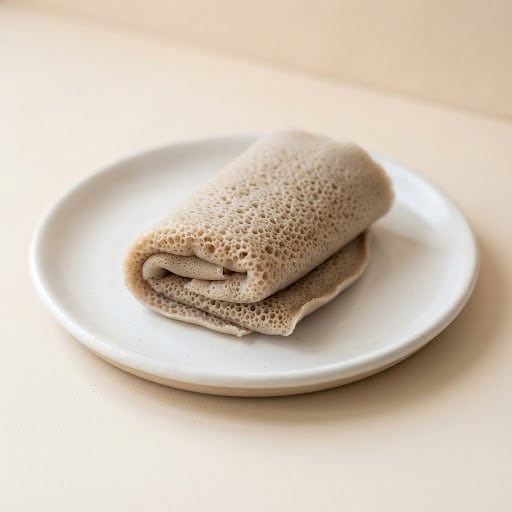
Babies can have injera from about 6 months, soaked into a mild stew and mashed smooth at first, then torn into soft strips to hold from 7–8 months. Traditional injera is made from teff, a gluten-free grain rich in iron, but many store-bought versions also contain wheat or barley. Injera is spongy and soft, so it is a low choking risk when offered in strips.
How to serve injera by age
Shapes and textures change as your baby’s grasp and chewing grow.

6 months
Injera is not a first food in its usual form. Soak a little injera in a mild lentil or split pea stew made without added salt or hot spice, then blend or mash it smooth with a little breast milk or formula and offer it on a spoon.

7–8 months
Tear injera into strips about the length and width of two adult fingers and let your baby gum them. Dip the strips in a mild lentil or split pea stew made without added salt or hot spice, or mash soaked injera into the stew for a lumpier spoon food.

9–12 months
Offer smaller, bite-size pieces of injera soaked in soft stews like misir wat made mild, or mashed beans. Your baby can practice scooping food with the bread, just like the family does.

12 months +
Toddlers can share injera at family meals, tearing off pieces to scoop stews and vegetables. Set aside a milder, less salty portion before adding berbere or extra salt.
Why it’s good
Injera made from teff gives babies iron, fiber, magnesium, protein and B vitamins. The fermentation used to make injera may help the body absorb its minerals. Pairing injera with lentils, beans or meat stews adds even more iron and protein.
Safety notes
- Many injera breads, especially outside Ethiopia and Eritrea, are made with wheat or barley flour mixed with teff. Check the label or ask the bakery if your baby has a wheat allergy or celiac disease.
- Stews served with injera are often spicy and salty. Make a mild, low-salt version for babies and toddlers, and add berbere for adults at the table.
- Injera can clump when swallowed in big wads. Offer strips or moistened pieces, and let your baby take one piece at a time.
- Store injera wrapped at room temperature for a day or two, or refrigerate or freeze it. Discard it if it grows mold.
Introduce injera on its own, then keep it in
We list injera under wheat because most injera sold outside Ethiopia and Eritrea is made partly with wheat flour, a Top 9 allergen. Only 100% teff injera is wheat-free, so read labels and watch for hives, vomiting or swelling if wheat is new to your baby.
Injera for babies: questions parents ask
Quick answers about injera for babies and toddlers.
When can babies have injera?
Babies can have injera from about 6 months, as soon as they start solid foods. At 6 months, soak it in a mild stew and mash it smooth; from about 7–8 months, soft, spongy strips can be offered for babies to hold and gum.
Can babies have injera?
Yes, babies can eat injera, and teff injera is a great source of iron. Serve injera with mild, low-salt stews rather than spicy family dishes at first.
Is injera a choking hazard for babies?
Injera is a low choking risk because it is soft and spongy. Injera can clump in the mouth if a baby stuffs in a large piece, so offer strips and stay close during meals.
Is injera a common allergen?
Treat injera as a wheat food unless the label says 100% teff. Many injera breads contain wheat, a common allergen, while pure teff injera is naturally wheat-free and gluten-free.
How do I serve injera to a 6 month old?
To serve injera to a 6 month old, soak a little injera in a mild lentil or pea stew with no added salt, then blend or mash it smooth and offer it on a spoon. Soft injera strips to hold and dip can follow at 7–8 months.
Is injera gluten-free?
Injera made with only teff flour is gluten-free. Many restaurant and store-bought injera breads add wheat or barley, so they contain gluten unless labeled gluten-free.
Is injera a good source of iron for babies?
Yes, teff injera is one of the more iron-rich grain foods for babies. Serving injera with vitamin C-rich foods like tomatoes or peppers helps babies absorb that iron.
Can babies have Ethiopian or Eritrean stews with spice?
Babies can try mild amounts of spice from 6 months, but berbere and mitmita can be very hot. Set aside a portion of the stew before adding much spice or salt and build up slowly.
Why does injera taste sour?
Injera tastes sour because the batter is fermented for a few days before cooking. The tangy flavor is safe for babies and helps them get used to a wide range of tastes.
The takeaway
- Babies can have injera from about 6 months, soaked into a mild stew and mashed smooth at first, then torn into soft strips to hold from 7–8 months.
- Injera is not a first food in its usual form.
- Choking risk is low. Wheat is one of the Top 9 allergens: offer a small amount first, watch for a reaction, then keep it in the diet regularly.
Read next


Sources
This guide follows current advice from these organizations.
- Starting Solid Foods American Academy of Pediatrics (HealthyChildren.org)
- When, What, and How to Introduce Solid Foods Centers for Disease Control and Prevention
- Choking Hazards Centers for Disease Control and Prevention
- Iron Centers for Disease Control and Prevention
- The Effects of Early Nutritional Interventions on the Development of Atopic Disease in Infants and Children Greer FR, Sicherer SH, Burks AW; American Academy of Pediatrics. Pediatrics. 2019;143(4):e20190281
Track every new food in your baby’s passport
Track the first 100 foods and the Top 9 allergens. 7 days free.
More grains for babies
Updated November 2026. Reviewed by our dietitians. Based on AAP, CDC and NIAID guidance. Written for healthy, full-term babies; not a substitute for your pediatrician. If your baby was born early, has a medical condition, feeding difficulties or a known allergy, check with them first (medical disclaimer). Always stay with your baby while they eat.