
Grains Food Library
When can babies have grits?
Can babies eat grits?
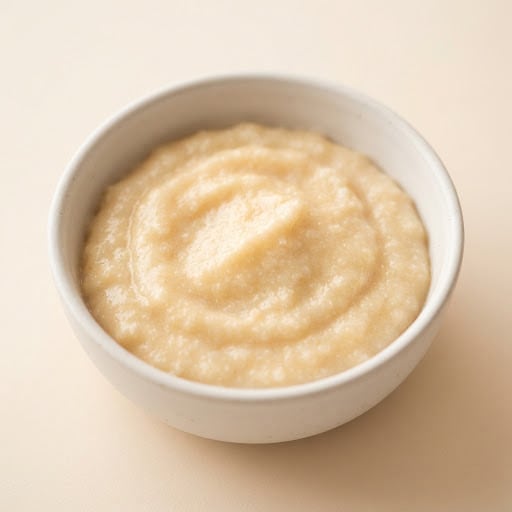
Babies can have grits from about 6 months, cooked smooth and cooled to a warm temperature. Make grits with water, breast milk or formula and skip the salt, butter and cheese that are common in family recipes. Plain grits are made from corn and are not a common allergen.
How to serve grits by age
Shapes and textures change as your baby’s grasp and chewing grow.

6 months
Cook plain grits until smooth and thick, then thin with breast milk or formula if needed and offer on a spoon or a pre-loaded spoon. Stir in mashed sweet potato, pureed greens or a little thinned nut butter for flavor and nutrition.

7–8 months
Serve thicker grits with a little more texture, mixed with fork-mashed beans, flaked fish or soft scrambled egg. You can also chill cooked grits in a pan and cut it into soft fingers that squash easily for your baby to hold.

9–12 months
Serve thicker grits in a bowl for self-feeding, or chill cooked grits in a pan, cut into fingers and pan-fry lightly for a holdable grit cake.

12 months +
Toddlers can eat grits as a family breakfast or side, topped with scrambled egg, beans, shredded cheese or greens. Keep salt and butter light.
Why it’s good
Grits give babies carbohydrate for energy, and enriched grits are fortified with iron, folate and other B vitamins. Stone-ground grits keep more fiber. Topping grits with eggs, beans or meat adds protein and more iron.
Safety notes
- Cool grits well before serving. Thick grits hold heat and can burn a baby's mouth, so stir and test the temperature.
- Skip instant flavored grits, which can be high in sodium. Cook plain grits without salt for babies.
- Hold off on adding lots of butter and cheese for babies, and choose low-sodium cheese if you add any.
- Whisk while cooking to avoid lumps, which can cause gagging in young babies.
A low-allergy food, still worth watching
Plain grits are made from corn and are not a common allergen, and corn allergy is rare. Cheese grits contain dairy and some mixes contain other allergens, so check the label.
Grits for babies: questions parents ask
Quick answers about grits for babies and toddlers.
When can babies have grits?
Babies can have grits from about 6 months, cooked smooth and served warm, not hot. Plain grits without added salt are best for babies.
Can babies eat grits?
Yes, babies can eat plain grits as a first grain. Grits are soft, easy to swallow and simple to mix with vegetables or protein foods.
Are grits a choking hazard for babies?
Grits are a low choking risk for babies when cooked smooth. Whisk grits well to break up lumps, and let them cool so they are not too hot.
Are grits a common allergen?
No, plain grits are not a common allergen because they are made from corn. Cheese grits and some flavored mixes contain dairy or other allergens.
How do I serve grits to a 6 month old?
To serve grits to a 6 month old, cook plain grits until smooth, thin them with breast milk or formula and let them cool. Offer grits on a preloaded spoon, plain or mixed with a vegetable puree.
Are instant grits okay for babies?
Plain instant grits are okay for babies, but flavored instant grits are often high in sodium. Check the label and choose plain grits with no added salt.
Are grits a good source of iron for babies?
Enriched grits contain some added iron, but grits are not one of the richest iron foods. Serve grits with eggs, beans or meat to boost the iron in the meal.
Can babies eat cheese grits?
Babies can have cheese grits once dairy has been introduced, with a small amount of low-sodium cheese. Restaurant and boxed cheese grits are often very salty, so homemade is better for babies.
The takeaway
- Babies can have grits from about 6 months, cooked smooth and cooled to a warm temperature.
- Cook plain grits until smooth and thick, then thin with breast milk or formula if needed and offer on a spoon or a pre-loaded spoon.
- Choking risk is low. Not a Top 9 allergen, but offer a small amount first and watch for any reaction.
Read next



Sources
This guide follows current advice from these organizations.
- Starting Solid Foods American Academy of Pediatrics (HealthyChildren.org)
- When, What, and How to Introduce Solid Foods Centers for Disease Control and Prevention
- Choking Hazards Centers for Disease Control and Prevention
- Foods and Drinks to Avoid or Limit Centers for Disease Control and Prevention
Track every new food in your baby’s passport
Track the first 100 foods and the Top 9 allergens. 7 days free.
More grains for babies
Updated November 2026. Reviewed by our dietitians. Based on AAP, CDC and NIAID guidance. Written for healthy, full-term babies; not a substitute for your pediatrician. If your baby was born early, has a medical condition, feeding difficulties or a known allergy, check with them first (medical disclaimer). Always stay with your baby while they eat.