
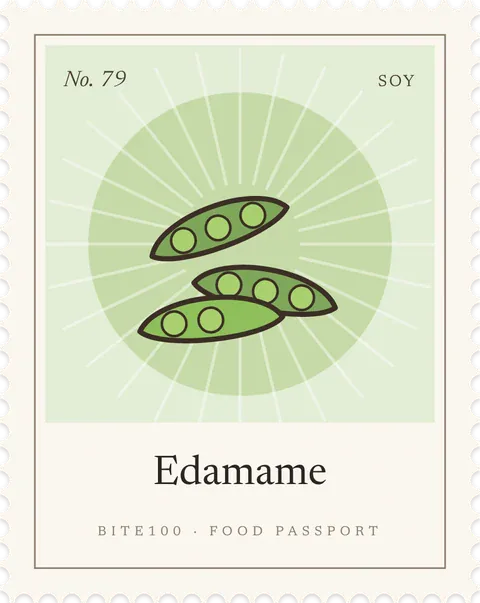
No. 79 · Protein Passport food
When can babies have edamame?
Can babies have edamame?
Babies can have edamame from about 6 months, as soon as they are ready for solids, but only shelled, cooked soft and smashed or blended. Whole edamame beans are a choking hazard. Edamame is soy, a Top 9 allergen, so introduce it carefully and keep offering it regularly once tolerated.
How to serve edamame by age
Shapes and textures change as your baby’s grasp and chewing grow.

6 months
Cook shelled edamame until very soft, then blend it into a smooth puree with a little olive oil, water, breast milk or formula. Offer it on a spoon or on a pre-loaded spoon your baby can hold. Never serve whole beans at this age.

7–8 months
Mash cooked shelled edamame with a fork into a thicker, slightly lumpy paste and stir it into rice or mashed potato. You can also spread smooth edamame paste thinly on soft toast strips for your baby to hold.

9–12 months
Cook shelled edamame until soft and smash each bean flat between your fingers before serving, so baby can practice the pincer grasp. Smashed edamame also mixes well into rice, pasta, fritters or scrambled eggs.

12 months +
Keep smashing or halving edamame beans for young toddlers, and mix them into stir-fries, grain bowls and soups. Wait on whole beans until your child chews well, and keep the tough pods out of reach, since they are not meant to be eaten.
Why it’s good
Edamame is young soybeans and gives babies complete plant protein, iron, folate, fiber, vitamin K and some calcium and omega-3 fats. It is one of the best plant sources of protein for babies. Pairing edamame with vitamin C foods like tomato, broccoli or citrus helps babies absorb its plant iron.
Safety notes
- Whole edamame beans are a choking hazard: they are firm, round and slippery. Always cook them soft and mash, blend or flatten each bean for babies.
- Remove edamame from the pod. The pods are tough and fibrous, are not edible, and can be a choking risk if chewed.
- Soy is a Top 9 allergen. Offer edamame for the first time at home, early in the day, and watch your baby for at least two hours afterward.
- Skip salted edamame and roasted crunchy edamame snacks for babies. Roasted edamame is hard and crunchy and is a choking hazard for young children.
- Seat baby upright and stay within arm's reach while they eat.
Introduce edamame on its own, then keep it in
Soy is one of the Top 9 food allergens, and soy allergy is most common in babies and young children, though many outgrow it. Watch for hives, swelling, vomiting, coughing or wheezing, and call emergency services for trouble breathing or swelling of the lips or tongue. If your baby has a cow's milk protein allergy or FPIES, talk to your pediatrician before introducing soy, since some of these babies react to soy too.
Edamame for babies: questions parents ask
Quick answers about edamame for babies and toddlers.
When can babies have edamame?
Babies can have edamame from about 6 months, as soon as they are ready for solids. Edamame must be shelled, cooked until soft and mashed or blended, because whole beans are a choking hazard.
Can babies have edamame?
Yes, babies can eat edamame from around 6 months when it is prepared safely. Shelled edamame cooked soft and smashed into a paste or flattened is a great source of plant protein and iron for babies.
Is edamame a choking hazard for babies?
Yes, edamame is a high choking risk for babies when served whole, because the beans are firm, round and slippery. Mash, blend or flatten every edamame bean for babies and young toddlers, and never offer the pods.
Is edamame a common allergen?
Yes, edamame is a soybean, and soy is one of the Top 9 common food allergens. Introduce edamame on its own, in a small amount at first, and keep it in your baby's diet regularly if there is no reaction.
How do I serve edamame to a 6 month old?
To serve edamame to a 6 month old, cook shelled edamame until very soft and blend it into a smooth puree with a little water, breast milk or formula. Offer it on a spoon or a pre-loaded spoon. Thin spreads on soft toast strips can follow at 7–8 months.
How do I introduce soy safely with edamame?
To introduce soy with edamame, offer a small spoonful of smooth edamame puree at home, early in the day, when your baby is healthy. If there is no reaction over the next couple of hours, gradually offer more at later meals and keep soy in the diet a few times a week.
Are phytoestrogens in edamame safe for babies?
Phytoestrogens in edamame are considered safe for babies in the normal amounts found in food. Soy foods are a traditional part of many children's diets around the world, and current guidance supports soy as part of a varied diet; ask your pediatrician if you have specific concerns.
Can I use frozen edamame for my baby?
Frozen edamame is a convenient choice for babies and is usually sold already shelled. Cook frozen edamame until very soft, then mash or flatten the beans, and choose plain bags without added salt.
Can babies have edamame pods?
No, babies should not eat edamame pods. The pods are tough, fibrous and not meant to be eaten even by adults, so always remove the beans from the pods before serving edamame.
Is edamame good for babies?
Yes, edamame is good for babies from about 6 months, giving complete plant protein, iron, folate and fiber. Serve it shelled, cooked soft and blended or smashed, since whole beans are a choking hazard. Edamame is soy, a Top 9 allergen, so introduce it early and keep offering it regularly once tolerated.
Is edamame good for toddlers?
Yes, edamame is a nutritious food for toddlers over 12 months, adding plant protein, iron and fiber to stir-fries, grain bowls and soups. Keep smashing or halving the beans for young toddlers until they chew well, and never offer the tough pods. Pair edamame with vitamin C foods like tomato or citrus.
The takeaway
- Babies can have edamame from about 6 months, as soon as they are ready for solids, but only shelled, cooked soft and smashed or blended.
- Cook shelled edamame until very soft, then blend it into a smooth puree with a little olive oil, water, breast milk or formula.
- Choking risk is high. Soy is one of the Top 9 allergens: offer a small amount first, watch for a reaction, then keep it in the diet regularly.
Read next


Sources
This guide follows current advice from these organizations.
- Starting Solid Foods American Academy of Pediatrics (HealthyChildren.org)
- When, What, and How to Introduce Solid Foods Centers for Disease Control and Prevention
- Choking Hazards Centers for Disease Control and Prevention
- Choking Prevention American Academy of Pediatrics (HealthyChildren.org)
- Iron Centers for Disease Control and Prevention
- The Effects of Early Nutritional Interventions on the Development of Atopic Disease in Infants and Children Greer FR, Sicherer SH, Burks AW; American Academy of Pediatrics. Pediatrics. 2019;143(4):e20190281
Stamp edamame in your baby’s passport
Track the first 100 foods and the Top 9 allergens. 7 days free.
Recipes with edamame

More protein foods for babies



Updated November 2026. Reviewed by our dietitians. Based on AAP, CDC and NIAID guidance. Written for healthy, full-term babies; not a substitute for your pediatrician. If your baby was born early, has a medical condition, feeding difficulties or a known allergy, check with them first (medical disclaimer). Always stay with your baby while they eat.