
Dairy Food Library
When can babies have yogurt melts?
Can babies have yogurt melts?
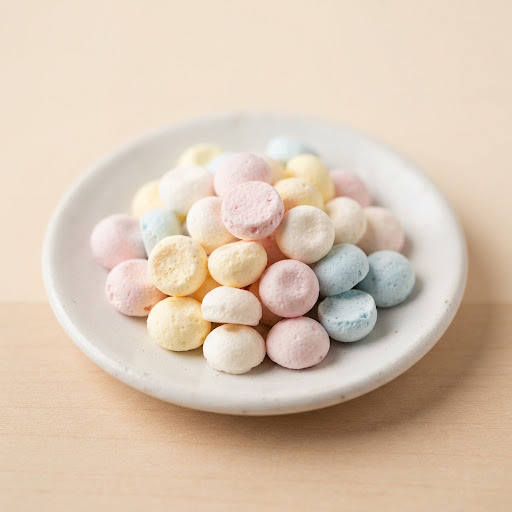
Most babies can have yogurt melts around 8 months, once they can pick up small foods. Yogurt melts are freeze-dried yogurt drops that dissolve quickly, so they are a low choking risk, but many contain added sugar. Yogurt melts are made from milk, so introduce dairy first in a simpler form like plain yogurt.
How to serve yogurt melts by age
Shapes and textures change as your baby’s grasp and chewing grow.

6 months
Yogurt melts are not needed at 6 months. Offer plain whole-milk yogurt on a spoon or pre-loaded spoon instead, once dairy has been introduced.

7–8 months
Plain yogurt on a spoon is still the better everyday choice. Near 8 months, you can place a few yogurt melts that dissolve quickly on the tray for your baby to rake up.

9–12 months
Offer a small handful of yogurt melts as pincer-grasp practice or as part of a snack with soft fruit. Serve them in a bowl at the high chair rather than from a snack cup on the go.

12 months +
Toddlers can have yogurt melts as an occasional snack. Plain whole milk yogurt with fruit gives more protein and less sugar, so treat melts as an extra.
Why it’s good
Yogurt melts contain some milk protein and calcium, and some have live cultures, but they are light and mostly made of yogurt solids, starch and often sugar. A spoonful of plain yogurt gives far more protein and calcium than a handful of melts.
Safety notes
- Do the melt test. A yogurt melt should dissolve quickly when pressed with a wet finger.
- Check the label for added sugar and choose brands with little or none. Skip versions sweetened with honey before 12 months.
- Serve yogurt melts with your baby seated upright, never while crawling, walking or in a car seat.
- Keep the bag sealed and dry. Melts that absorb moisture can turn sticky and gummy.
Introduce yogurt melts on its own, then keep it in
Yogurt melts are made from cow's milk, one of the Top 9 allergens, so introduce dairy first with plain yogurt and watch for hives, vomiting, swelling or wheezing. Some brands also contain other allergens, so read the label.
Yogurt melts for babies: questions parents ask
Quick answers about yogurt melts for babies and toddlers.
When can babies have yogurt melts?
Babies can have yogurt melts around 8 months, once they can pick up small foods and have already tried dairy. Yogurt melts are optional, and plain yogurt is a better everyday choice.
Can babies have yogurt melts?
Yes, babies can eat yogurt melts that dissolve quickly in the mouth. Yogurt melts work best as an occasional snack and finger-food practice.
Are yogurt melts a choking hazard for babies?
Yogurt melts are a low choking risk because they dissolve quickly with saliva. Do a melt test with a new brand and always serve them with your baby seated upright.
Are yogurt melts a common allergen?
Yes, yogurt melts are a common allergen because they are made from milk, one of the Top 9 food allergens. Introduce plain yogurt first, then try yogurt melts once dairy is tolerated.
How do I serve yogurt melts to a 6 month old?
Yogurt melts are not needed at 6 months, when plain whole-milk yogurt on a spoon or pre-loaded spoon is a better way to offer dairy. Wait until around 8 months, when your baby can rake up small foods, to try yogurt melts.
Are yogurt melts healthy for babies?
Yogurt melts are not as nutritious as plain yogurt because they contain less protein and often added sugar. Yogurt melts are fine as a small treat but should not replace real yogurt.
Can I make yogurt melts at home?
Yes, you can make yogurt melts at home by piping small dots of plain whole milk yogurt mixed with mashed fruit onto a lined tray and freezing them. Homemade frozen yogurt melts soften fast, so serve them right away and only to babies who manage small foods.
Do yogurt melts have sugar?
Many store-bought yogurt melts contain added sugar, and some list it as cane sugar or fruit juice concentrate. Compare labels and choose the yogurt melts with the lowest added sugar.
The takeaway
- Most babies can have yogurt melts around 8 months, once they can pick up small foods.
- Plain yogurt on a spoon is still the better everyday choice.
- Choking risk is low. Dairy is one of the Top 9 allergens: offer a small amount first, watch for a reaction, then keep it in the diet regularly.
Read next


Sources
This guide follows current advice from these organizations.
- Starting Solid Foods American Academy of Pediatrics (HealthyChildren.org)
- When, What, and How to Introduce Solid Foods Centers for Disease Control and Prevention
- Choking Hazards Centers for Disease Control and Prevention
- Foods and Drinks to Avoid or Limit Centers for Disease Control and Prevention
- Dietary Guidelines for Americans, 2020-2025 U.S. Department of Agriculture and HHS
- The Effects of Early Nutritional Interventions on the Development of Atopic Disease in Infants and Children Greer FR, Sicherer SH, Burks AW; American Academy of Pediatrics. Pediatrics. 2019;143(4):e20190281
Track every new food in your baby’s passport
Track the first 100 foods and the Top 9 allergens. 7 days free.
More dairy foods for babies
Updated November 2026. Reviewed by our dietitians. Based on AAP, CDC and NIAID guidance. Written for healthy, full-term babies; not a substitute for your pediatrician. If your baby was born early, has a medical condition, feeding difficulties or a known allergy, check with them first (medical disclaimer). Always stay with your baby while they eat.