
Dairy Food Library
When can babies have sour cream?
Can babies have sour cream?
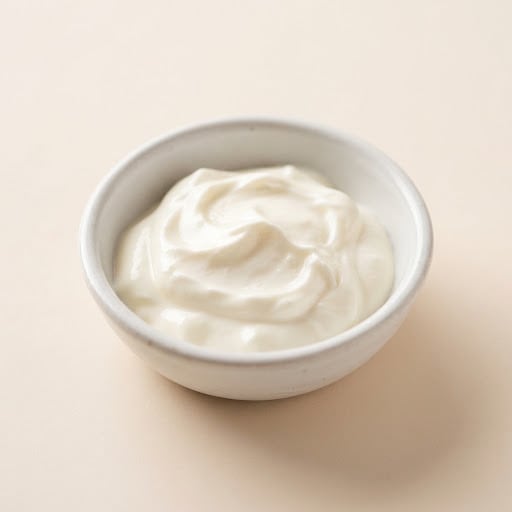
Babies can have pasteurized sour cream from about 6 months, on a spoon or stirred into food at first, and as a dip for soft foods from 7–8 months. Plain sour cream is soft, creamy and low risk for choking. Sour cream is made from cow's milk, so it is a dairy allergen.
How to serve sour cream by age
Shapes and textures change as your baby’s grasp and chewing grow.

6 months
Offer a spoonful of plain sour cream on a spoon or preloaded spoon, or stir it into smooth mashed potato, sweet potato or a vegetable puree. It also cools down spiced family foods.

7–8 months
Stir sour cream into lumpier mashes, or use it as a dip for soft roasted vegetable wedges that squash easily between your fingers.

9–12 months
Use sour cream as a dip for soft finger foods like potato wedges or quesadilla strips, or swirl it into soups and stews. Pair it with iron-rich foods like beans or meat.

12 months +
Toddlers can enjoy sour cream on tacos, baked potatoes, chili and pancakes, or in homemade dips with herbs. Avoid packaged flavored dips that are high in salt.
Why it’s good
Sour cream gives babies fat for energy and brain growth, plus small amounts of vitamin A, calcium and protein. It is lower in protein and calcium than yogurt or cheese, so think of it as a topping rather than a main dairy food. Full-fat sour cream is a good choice for babies.
Safety notes
- Choose sour cream made from pasteurized milk and cream. Nearly all store-bought sour cream is pasteurized.
- Pick plain sour cream. Flavored dips and onion dips are high in salt.
- Full-fat sour cream is fine for babies. Light and fat-free versions often contain thickeners and are not needed.
- Keep sour cream in the fridge and throw it out if it smells off, turns watery and pink, or shows mold.
- Do not leave sour cream dips out at room temperature for more than 2 hours.
Introduce sour cream on its own, then keep it in
Sour cream is a dairy food, and cow's milk is one of the Top 9 allergens. Introduce a small amount, watch for hives, vomiting, swelling or wheezing, and talk to your pediatrician first if your baby has eczema or another food allergy.
Sour cream for babies: questions parents ask
Quick answers about sour cream for babies and toddlers.
When can babies have sour cream?
Babies can have pasteurized sour cream from about 6 months, on a spoon or mixed into food, and as a dip from 7–8 months. Sour cream is soft and easy to eat, and it helps introduce dairy.
Can babies have sour cream?
Yes, babies can eat plain, pasteurized sour cream in small amounts. Flavored sour cream dips are too salty for babies.
Is sour cream a choking hazard for babies?
Sour cream is a low choking risk for babies because it is smooth and soft. As with any food, keep portions small and supervise meals.
Is sour cream a common allergen?
Yes, sour cream is a common allergen because it is made from cow's milk. Offer sour cream in a small amount first and watch for signs of a reaction.
How do I serve sour cream to a 6 month old?
To serve sour cream to a 6 month old, offer a little on a spoon or preloaded spoon, or stir it into smooth mashed vegetables. Sour cream as a dip for soft roasted potato wedges can follow at 7–8 months.
Is full-fat or light sour cream better for babies?
Full-fat sour cream is a good choice for babies, who need fat for growth. Light sour cream is fine but offers no special benefit for babies.
Is sour cream healthier than yogurt for babies?
Plain yogurt has more protein and calcium than sour cream, so yogurt is the better everyday dairy food. Sour cream works well as an occasional topping or dip.
Can babies have sour cream dips?
Babies can eat homemade sour cream dips made with plain sour cream and fresh herbs. Store-bought onion and ranch dips are high in salt and best avoided before 12 months.
The takeaway
- Babies can have pasteurized sour cream from about 6 months, on a spoon or stirred into food at first, and as a dip for soft foods from 7–8 months.
- Offer a spoonful of plain sour cream on a spoon or preloaded spoon, or stir it into smooth mashed potato, sweet potato or a vegetable puree.
- Choking risk is low. Dairy is one of the Top 9 allergens: offer a small amount first, watch for a reaction, then keep it in the diet regularly.
Read next



Sources
This guide follows current advice from these organizations.
- Starting Solid Foods American Academy of Pediatrics (HealthyChildren.org)
- When, What, and How to Introduce Solid Foods Centers for Disease Control and Prevention
- Choking Hazards Centers for Disease Control and Prevention
- The Effects of Early Nutritional Interventions on the Development of Atopic Disease in Infants and Children Greer FR, Sicherer SH, Burks AW; American Academy of Pediatrics. Pediatrics. 2019;143(4):e20190281
Track every new food in your baby’s passport
Track the first 100 foods and the Top 9 allergens. 7 days free.
More dairy foods for babies
Updated November 2026. Reviewed by our dietitians. Based on AAP, CDC and NIAID guidance. Written for healthy, full-term babies; not a substitute for your pediatrician. If your baby was born early, has a medical condition, feeding difficulties or a known allergy, check with them first (medical disclaimer). Always stay with your baby while they eat.