
Protein Food Library
When can babies have seitan?
Can babies have seitan?
Babies can have seitan from about 6 months, as long as wheat has already been introduced and the seitan is finely chopped or ground. Seitan is made from wheat gluten, so it is a wheat allergen and is not suitable for babies with celiac disease or wheat allergy. Seitan is chewy and rubbery, so it needs careful prep to lower the choking risk.
How to serve seitan by age
Shapes and textures change as your baby’s grasp and chewing grow.

6 months
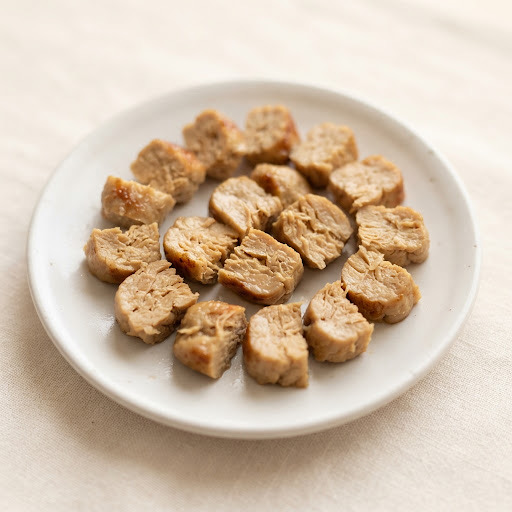
Simmer homemade or low-sodium seitan in water until soft, then grind it very finely and blend it into a smooth food like mashed potato, lentil puree or a sauce. Offer it on a spoon only after wheat has been introduced.

7–8 months
Mince seitan finely and mix it into thicker mashes, sauces or soft lentils. You can also make soft patties with ground seitan and mashed vegetables that fall apart easily, but never offer strips or chunks.

9–12 months
Offer finely chopped or crumbled seitan mixed into pasta sauce, rice or scrambled tofu. Keep pieces very small and moist.

12 months +
Toddlers can have thinly sliced or finely chopped seitan in stir-fries, tacos and stews. Keep pieces small and thin until your child chews well, closer to age 2.
Why it’s good
Seitan is very high in protein and often contains iron, especially when made with fortified flour or cooked in iron-rich broths. It is low in fat and fiber and lacks enough lysine on its own, so serve it with beans, lentils or soy foods for a complete protein.
Safety notes
- Introduce wheat in a simpler form, like wheat cereal or pasta, before serving seitan.
- Seitan is rubbery and dense. Grind, mince or finely chop it, and never serve chunks or cubes to babies.
- Store-bought seitan is often high in sodium from soy sauce and broth. Choose low-sodium versions, rinse it, or make seitan at home without salt.
- Many seitan products also contain soy and sometimes sesame; read the label.
- Seitan is pure gluten and must be avoided by children with celiac disease or wheat allergy.
Introduce seitan on its own, then keep it in
Seitan is made from wheat gluten, a Top 9 allergen, and often contains soy. Offer it only after wheat is tolerated, start with a small amount, and watch for hives, vomiting, swelling, coughing or wheezing.
Seitan for babies: questions parents ask
Quick answers about seitan for babies and toddlers.
When can babies have seitan?
Babies can have seitan from about 6 months, once wheat has been safely introduced. Seitan should be finely ground or chopped and mixed into soft foods.
Can babies have seitan?
Yes, babies can eat seitan in small amounts if they tolerate wheat. Choose low-sodium seitan or make it at home, and prepare it carefully because it is very chewy.
Is seitan a choking hazard for babies?
Yes, seitan can be a choking hazard because it is dense, rubbery and hard to chew. Grind or finely chop seitan for babies and avoid strips, cubes and chunks.
Is seitan a common allergen?
Yes, seitan is a common allergen because it is made from wheat gluten. Many seitan products also contain soy or sesame, so check the ingredients.
How do I serve seitan to a 6 month old?
To serve seitan to a 6 month old, simmer low-sodium seitan until soft, grind it very finely and blend it into mashed vegetables, lentils or a soft sauce, then offer it on a spoon. Offer it only after your baby has had wheat without a reaction.
Can babies have store-bought seitan?
Babies can eat store-bought seitan in small amounts, but many brands are high in sodium. Pick a low-sodium version, rinse it, and finely chop it before serving.
Is seitan healthy for babies?
Seitan can be a healthy protein for babies in vegetarian or vegan families, but it should not be the main protein every day. Rotate seitan with beans, lentils, tofu and eggs for more nutrients.
Can babies with celiac disease have seitan?
No, babies and children with celiac disease or a wheat allergy should never eat seitan. Seitan is concentrated wheat gluten.
How do I make seitan softer for my baby?
To make seitan softer for your baby, simmer it longer in broth, then grind it in a food processor and mix it with a moist food. Homemade seitan steamed or simmered gently is usually more tender than baked seitan.
The takeaway
- Babies can have seitan from about 6 months, as long as wheat has already been introduced and the seitan is finely chopped or ground.
- Simmer homemade or low-sodium seitan in water until soft, then grind it very finely and blend it into a smooth food like mashed potato, lentil puree or a sauce.
- Choking risk is medium. Wheat is one of the Top 9 allergens: offer a small amount first, watch for a reaction, then keep it in the diet regularly.
Read next

Sources
This guide follows current advice from these organizations.
- Starting Solid Foods American Academy of Pediatrics (HealthyChildren.org)
- When, What, and How to Introduce Solid Foods Centers for Disease Control and Prevention
- Choking Hazards Centers for Disease Control and Prevention
- Choking Prevention American Academy of Pediatrics (HealthyChildren.org)
- Foods and Drinks to Avoid or Limit Centers for Disease Control and Prevention
- Iron Centers for Disease Control and Prevention
- The Effects of Early Nutritional Interventions on the Development of Atopic Disease in Infants and Children Greer FR, Sicherer SH, Burks AW; American Academy of Pediatrics. Pediatrics. 2019;143(4):e20190281
Track every new food in your baby’s passport
Track the first 100 foods and the Top 9 allergens. 7 days free.
More protein foods for babies
Updated November 2026. Reviewed by our dietitians. Based on AAP, CDC and NIAID guidance. Written for healthy, full-term babies; not a substitute for your pediatrician. If your baby was born early, has a medical condition, feeding difficulties or a known allergy, check with them first (medical disclaimer). Always stay with your baby while they eat.