
Protein Food Library
When can babies have roe (fish eggs)?
Can babies have roe (fish eggs)?
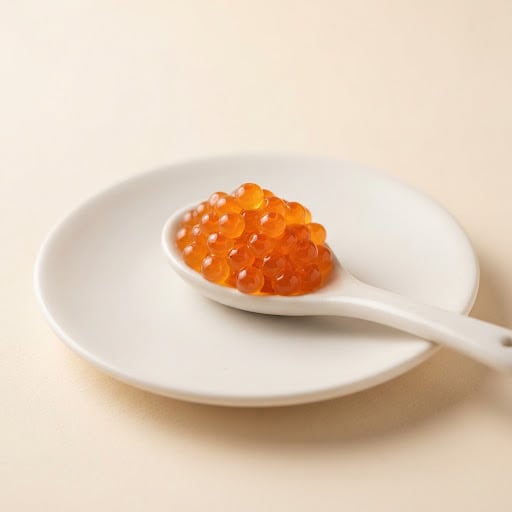
Babies can have fully cooked roe from about 6 months, in small amounts. Roe, or fish eggs, is a fish allergen and is often sold raw, cured and very salty, as in caviar, ikura, tobiko and taramasalata. For babies, cook roe into food or choose pasteurized products and keep portions tiny.
How to serve roe (fish eggs) by age
Shapes and textures change as your baby’s grasp and chewing grow.

6 months
Cook fresh roe, such as shad or cod roe, by poaching or pan-cooking until firm and opaque throughout, then mash it smooth into potato, rice porridge or a vegetable puree. Use only a small amount, since roe is rich and can be salty.

7–8 months
Mash cooked roe more roughly into lumpy potato, soft rice or soft scrambled egg. Keep portions small and still skip cured, salted or raw roe products.

9–12 months
Offer small pieces of cooked roe mixed into soft rice, pasta or omelets. Cooked roe sacs can be cut into tiny pieces or crumbled so they are easy to pick up.

12 months +
Toddlers can try cooked roe in fritters, pasta or rice dishes. Save raw and cured roe, such as salmon roe, caviar and tobiko on sushi, until your child is older, and offer only a few eggs when you do.
Why it’s good
Roe gives babies protein, omega-3 fats (DHA and EPA), vitamin B12, vitamin D and selenium. These support brain, eye and nerve development. Roe also contains cholesterol and, in cured forms, a lot of salt, so small portions are best.
Safety notes
- Serve only fully cooked roe to babies and young children. Raw and cured roe can carry Listeria and other bacteria and parasites.
- Cured roe like caviar, ikura, tobiko, masago and bottarga is very high in salt. Skip it for babies and keep it to a tiny taste for older toddlers.
- Pasteurized roe products are safer than unpasteurized ones. Check the label and keep them refrigerated.
- Spreads like taramasalata may contain raw roe, a lot of salt and sometimes raw egg. Avoid them for babies.
- Roe from high-mercury fish such as shark or swordfish is not suitable. Choose roe from low-mercury fish like salmon, trout, cod, pollock or herring.
Introduce roe (fish eggs) on its own, then keep it in
Roe is a fish product, and fish is one of the Top 9 food allergens; children with fish allergy may also react to roe. Introduce fish first, then a small amount of cooked roe, and watch for hives, vomiting, swelling or wheezing.
Roe (fish eggs) for babies: questions parents ask
Quick answers about roe (fish eggs) for babies and toddlers.
When can babies have roe (fish eggs)?
Babies can have fully cooked roe from about 6 months of age, in small amounts. Raw and cured roe, such as caviar and salmon roe, should wait until your child is older because of food safety and salt.
Can babies have fish eggs?
Yes, babies can eat fish eggs that are fully cooked and served in small amounts. Fish eggs are a source of omega-3 fats and vitamin B12, but cured roe is very salty.
Is roe a choking hazard for babies?
Roe is a low choking risk because fish eggs are tiny and soft. Cooked roe sacs can be firm, so mash or cut them into small pieces, and stay with your baby during meals.
Is roe a common allergen?
Yes, roe is a common allergen because it comes from fish, one of the Top 9 food allergens. Introduce fish first, then offer a small amount of cooked roe and watch for signs of a reaction.
How do I serve roe to a 6 month old?
To serve roe to a 6 month old, cook fresh roe until firm and opaque, then mash a small amount into potato, rice or scrambled egg. Avoid salted, cured or raw roe products at this age.
Can babies have caviar?
Babies should not eat caviar, because caviar is usually raw, cured and very high in salt. A small taste of pasteurized caviar is better saved for older toddlers and children.
Can toddlers eat salmon roe (ikura) or tobiko on sushi?
Salmon roe, ikura and tobiko on sushi are usually raw and salted, so they are best avoided for toddlers. Many experts suggest waiting until at least age 5 for raw fish products, and keeping portions small after that.
Is roe high in mercury?
Roe from low-mercury fish like salmon, trout, cod and herring is generally low in mercury. Avoid roe from high-mercury fish such as shark, swordfish and bigeye tuna for babies and children.
Is roe healthy for babies?
Roe can be healthy for babies in small, cooked amounts because it provides omega-3 fats, vitamin B12, vitamin D and protein. Regular low-mercury fish like salmon gives the same benefits with less salt.
The takeaway
- Babies can have fully cooked roe from about 6 months, in small amounts.
- Cook fresh roe, such as shad or cod roe, by poaching or pan-cooking until firm and opaque throughout, then mash it smooth into potato, rice porridge or a vegetable puree.
- Choking risk is low. Fish is one of the Top 9 allergens: offer a small amount first, watch for a reaction, then keep it in the diet regularly.
Read next


Sources
This guide follows current advice from these organizations.
- Starting Solid Foods American Academy of Pediatrics (HealthyChildren.org)
- When, What, and How to Introduce Solid Foods Centers for Disease Control and Prevention
- Choking Hazards Centers for Disease Control and Prevention
- Foods and Drinks to Avoid or Limit Centers for Disease Control and Prevention
- Advice about Eating Fish U.S. Food and Drug Administration
- Preventing Listeria Infection Centers for Disease Control and Prevention
- The Effects of Early Nutritional Interventions on the Development of Atopic Disease in Infants and Children Greer FR, Sicherer SH, Burks AW; American Academy of Pediatrics. Pediatrics. 2019;143(4):e20190281
Track every new food in your baby’s passport
Track the first 100 foods and the Top 9 allergens. 7 days free.
More protein foods for babies
Updated November 2026. Reviewed by our dietitians. Based on AAP, CDC and NIAID guidance. Written for healthy, full-term babies; not a substitute for your pediatrician. If your baby was born early, has a medical condition, feeding difficulties or a known allergy, check with them first (medical disclaimer). Always stay with your baby while they eat.