
Veggies Food Library
When can babies have rocotillo peppers?
Can babies have rocotillo peppers?
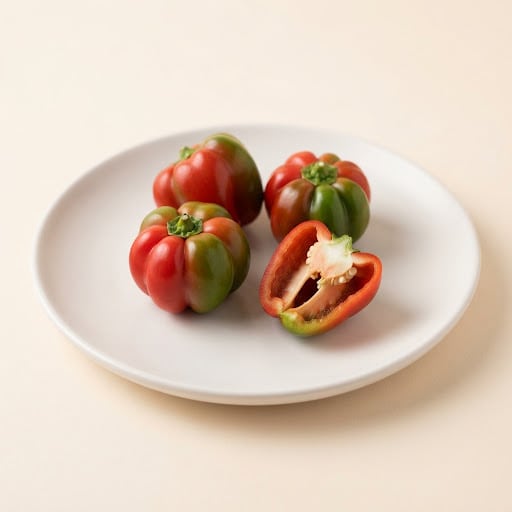
Babies can have rocotillo peppers from about 6 months, cooked and finely chopped into food. Rocotillo is a small, squash-shaped pepper with a fruity flavor and usually very mild heat, popular in Caribbean and Latin American cooking. Remove the seeds and inner ribs, where most of any heat sits.
How to serve rocotillo peppers by age
Shapes and textures change as your baby’s grasp and chewing grow.

6 months
Remove the stem, seeds and white ribs, then roast or saute the rocotillo until soft. Blend it into smooth bean, squash or vegetable purees, or cook it into a sofrito for the family pot and blend your baby's portion smooth.

7–8 months
Mince soft cooked rocotillo finely and stir it into mashed beans, rice, soft scrambled eggs or lumpier vegetable mashes. Taste first, and use less if a pepper is hotter than expected.

9–12 months
Keep adding minced cooked rocotillo to family dishes like stews, rice and beans and soft omelets. Taste first: if a pepper is hotter than expected, use less or mix it into a larger batch.

12 months +
Toddlers can have rocotillo chopped small in cooked dishes, salsas and stir-fries. Try small pieces of raw rocotillo once your toddler chews well, since raw pepper skin can be tough.
Why it’s good
Rocotillo peppers give babies vitamin C, vitamin A and antioxidants, though only in small amounts since they are used as a flavoring. Vitamin C helps the body absorb iron from beans, lentils and fortified grains in the same meal. The bright, fruity flavor helps babies enjoy family food without salt.
Safety notes
- Remove all seeds and white ribs, and taste a small piece before serving. Heat can vary between peppers and growing conditions.
- Rocotillo looks similar to hot peppers like habanero and Scotch bonnet. Buy from a seller you trust, and do not swap in very hot peppers for your baby.
- Wash your hands after cutting peppers so you do not get capsaicin in your baby's eyes or on their skin.
- Pepper skin can be tough. Cook and mince rocotillo for babies, or peel roasted peppers.
- If your baby eats something too spicy, offer breast milk, formula, plain yogurt or milk (over 12 months) to cool the mouth, and expect some fussiness or a red bottom.
A low-allergy food, still worth watching
Rocotillo peppers are not a common allergen, though pepper allergies are rare but possible. Offer a small amount first and watch for hives, swelling or vomiting, and remember that redness around the mouth after peppers is often from capsaicin, not allergy.
Rocotillo peppers for babies: questions parents ask
Quick answers about rocotillo peppers for babies and toddlers.
When can babies have rocotillo peppers?
Babies can have rocotillo peppers from about 6 months of age, once they start solids. Rocotillo peppers should be seeded, cooked until soft and finely chopped into food.
Can babies have rocotillo peppers?
Yes, babies can eat rocotillo peppers in small amounts mixed into family food. Rocotillo peppers are usually mild and add a fruity flavor to rice, beans and stews.
Is rocotillo pepper a choking hazard for babies?
Rocotillo pepper is a low choking risk when it is cooked and finely chopped. Raw pepper skin can be tough and hard to chew, so mince rocotillo for babies and stay with your child during meals.
Is rocotillo pepper a common allergen?
No, rocotillo pepper is not a common allergen. Pepper allergies are rare, but introduce rocotillo in small amounts and watch for any reaction.
How do I serve rocotillo pepper to a 6 month old?
To serve rocotillo pepper to a 6 month old, remove the seeds and ribs, cook the pepper until soft, then blend it into a smooth food like bean or squash puree. A small amount gives plenty of flavor, and finely minced pepper in lumpier foods can follow at 7–8 months.
Is rocotillo pepper spicy?
Rocotillo pepper is usually very mild, with little to no heat, although some peppers can be a bit warmer. Removing the seeds and ribs of rocotillo pepper keeps it gentle for babies.
Is rocotillo the same as aji dulce?
Rocotillo and aji dulce are similar mild seasoning peppers used in Caribbean cooking, and the names are sometimes used for related varieties. Both can be served to babies the same way: seeded, cooked and finely chopped.
Can babies have sofrito with rocotillo?
Yes, babies can have homemade sofrito made with rocotillo, onion, garlic and herbs, cooked into food. Store-bought sofrito or seasoning packets may be high in salt, so make your own or use small amounts.
What if my baby eats a pepper that is too spicy?
If a baby eats a pepper that is too spicy, offer breast milk, formula or plain yogurt to cool the mouth and wipe their hands so they do not rub their eyes. Spicy food is not dangerous, but it may cause brief fussiness.
The takeaway
- Babies can have rocotillo peppers from about 6 months, cooked and finely chopped into food.
- Remove the stem, seeds and white ribs, then roast or saute the rocotillo until soft.
- Choking risk is low. Not a Top 9 allergen, but offer a small amount first and watch for any reaction.
Read next


Sources
This guide follows current advice from these organizations.
- Starting Solid Foods American Academy of Pediatrics (HealthyChildren.org)
- When, What, and How to Introduce Solid Foods Centers for Disease Control and Prevention
- Choking Hazards Centers for Disease Control and Prevention
Track every new food in your baby’s passport
Track the first 100 foods and the Top 9 allergens. 7 days free.
More vegetables for babies
Updated November 2026. Reviewed by our dietitians. Based on AAP, CDC and NIAID guidance. Written for healthy, full-term babies; not a substitute for your pediatrician. If your baby was born early, has a medical condition, feeding difficulties or a known allergy, check with them first (medical disclaimer). Always stay with your baby while they eat.