
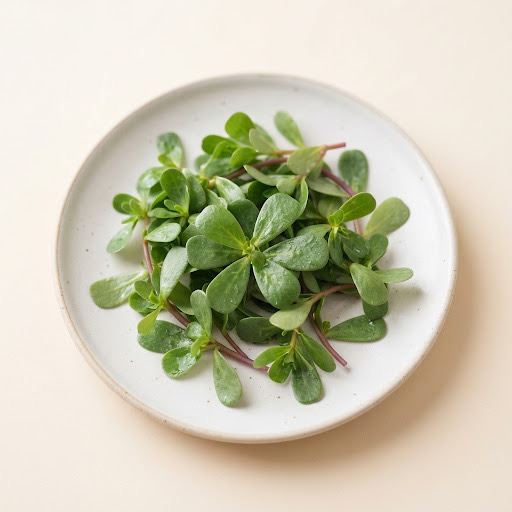
Veggies Food Library
When can babies have purslane?
Can babies have purslane?
Babies can have purslane from 6 months, cooked until soft and finely chopped into other foods. Purslane is a lemony, slightly sour leafy green that is a low choking risk when chopped. Purslane is not a common allergen, but it is high in oxalates, so serve it as one green among many.
How to serve purslane by age
Shapes and textures change as your baby’s grasp and chewing grow.

6 months
Wash purslane well, remove thick stems, and steam or saute the leaves until tender. Blend them smooth and stir into mashed potato, plain yogurt or lentil puree, then offer it on a spoon.

7–8 months
Finely chop cooked purslane and stir it into lumpier mashed potato, soft scrambled eggs, yogurt or lentils. Remove thick stems, which can be chewy.

9–12 months
Mix chopped cooked purslane into soft foods like omelets, fritters, rice or bean dishes. The tender leaves and small stems soften well with cooking.

12 months +
Toddlers can have cooked purslane in stews and egg dishes, or a small amount of finely chopped raw purslane in salads mixed with yogurt or soft cheese.
Why it’s good
Purslane is unusually rich in omega-3 fat (ALA) for a leafy green, and also gives vitamin A, vitamin C, magnesium and potassium. It contains some iron, and its vitamin C helps your baby absorb it. Its mild, tangy flavor adds variety to vegetables.
Safety notes
- Only forage purslane if you are sure of its identity. Prostrate spurge looks similar and is toxic; it has thin stems and milky white sap, while purslane has thick, juicy stems and no milky sap.
- Avoid purslane from lawns, roadsides or areas treated with pesticides or used by pets.
- Wash purslane well in several changes of water to remove soil and grit.
- Purslane is high in oxalates. Rotate it with other greens rather than serving it in large amounts every day.
- Finely chop cooked leaves and stems for babies, as larger stems can be chewy.
A low-allergy food, still worth watching
Purslane is not a common allergen, though rare reactions can occur. Offer a small amount and watch for hives, swelling or vomiting.
Purslane for babies: questions parents ask
Quick answers about purslane for babies and toddlers.
When can babies have purslane?
Babies can have purslane from 6 months, once they start solid foods. Cook purslane until tender and chop or blend it finely into other foods.
Can babies have purslane?
Yes, babies can eat purslane when it is cooked and finely chopped. Purslane is a nutritious green with omega-3 fat, vitamin A and vitamin C.
Is purslane a choking hazard for babies?
Purslane is a low choking risk for babies when it is cooked and finely chopped. Thick stems and large leaves can be chewy or cause gagging, so chop them small and always supervise meals.
Is purslane a common allergen?
No, purslane is not a common allergen and is not one of the Top 9 food allergens. Reactions are rare, but watch the first few times you serve it.
How do I serve purslane to a 6 month old?
To serve purslane to a 6 month old, wash it well, steam the leaves until tender, then blend them smooth and stir into mashed potato, lentil puree or plain yogurt. Finely chopped purslane in scrambled eggs can follow at 7–8 months.
Is it safe to forage purslane for my baby?
Foraged purslane is safe for babies only if you are certain of its identity and it grew away from pesticides, roads and pets. Purslane can be confused with toxic spurge, which has milky sap, so buy it from a market if unsure.
Can babies have raw purslane?
Raw purslane is crunchy and best saved for toddlers, finely chopped and mixed into soft foods. For babies, cooked purslane is softer and easier to manage.
Is purslane high in oxalates?
Yes, purslane is high in oxalates, natural compounds also found in spinach. Purslane is fine as part of a varied diet, but rotate it with other vegetables rather than serving large amounts daily.
What does purslane taste like?
Purslane tastes lemony, slightly salty and a little sour, with a juicy crunch when raw. Cooking softens purslane and mellows its tang, which makes it easier for babies to accept.
The takeaway
- Babies can have purslane from 6 months, cooked until soft and finely chopped into other foods.
- Wash purslane well, remove thick stems, and steam or saute the leaves until tender.
- Choking risk is low. Not a Top 9 allergen, but offer a small amount first and watch for any reaction.
Read next


Sources
This guide follows current advice from these organizations.
- Starting Solid Foods American Academy of Pediatrics (HealthyChildren.org)
- When, What, and How to Introduce Solid Foods Centers for Disease Control and Prevention
- Choking Hazards Centers for Disease Control and Prevention
Track every new food in your baby’s passport
Track the first 100 foods and the Top 9 allergens. 7 days free.
More vegetables for babies
Updated November 2026. Reviewed by our dietitians. Based on AAP, CDC and NIAID guidance. Written for healthy, full-term babies; not a substitute for your pediatrician. If your baby was born early, has a medical condition, feeding difficulties or a known allergy, check with them first (medical disclaimer). Always stay with your baby while they eat.