
No. 87 · Dairy Passport food
When can babies have cottage cheese?
Can babies have cottage cheese?
Babies can have pasteurized cottage cheese from about 6 months. Cottage cheese is soft and protein-packed, but many brands are fairly salty, so pick a lower-sodium, full-fat version and serve it in small amounts. Cottage cheese is made from milk, a Top 9 allergen.
How to serve cottage cheese by age
Shapes and textures change as your baby’s grasp and chewing grow.

6 months
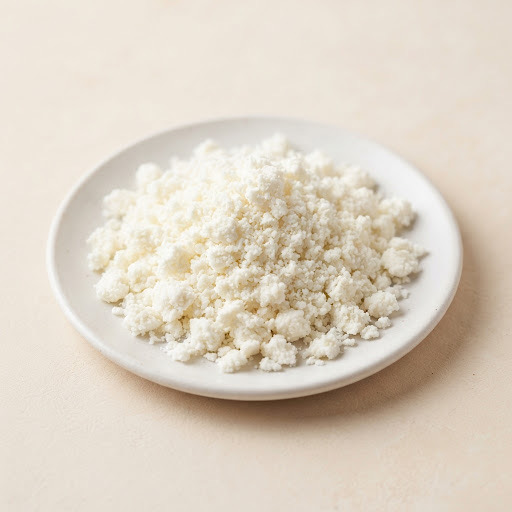
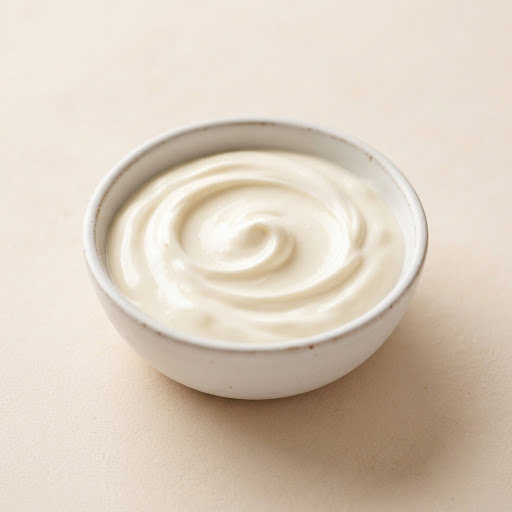
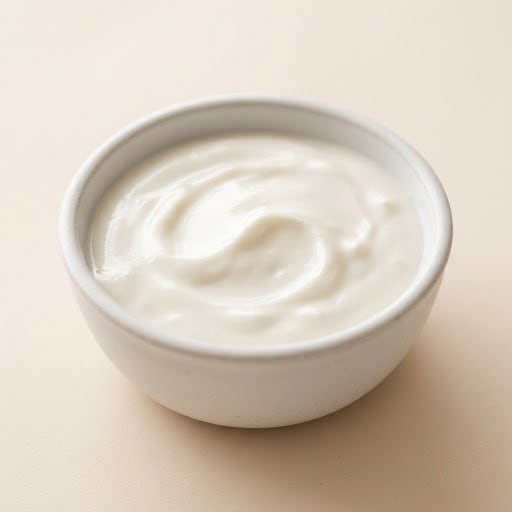
Blend full-fat, lower-sodium cottage cheese until smooth, or mash small curds well with a fork, and offer it on a spoon or a pre-loaded spoon. It is lovely stirred into smooth pear or banana puree.

7–8 months
Mash cottage cheese more roughly so some soft curds remain, and mix it with fork-mashed fruit or vegetables. You can also spread it on a soft toast strip for your baby to hold, or let them scoop it with their hands.

9–12 months
Serve small-curd cottage cheese in a bowl for hand scooping, or let your baby pick up curds with a pincer grasp. Stir it into soft scrambled egg, pasta or pancakes.

12 months +
Toddlers can eat cottage cheese with a spoon, topped with soft fruit, or blended into dips, pancakes and egg muffins. Keep choosing lower-sodium brands and keep portions moderate.
Why it’s good
Cottage cheese gives babies high-quality protein, calcium, phosphorus, vitamin B12, riboflavin and selenium. Full-fat cottage cheese adds the fat babies need for energy and brain growth. Many brands are higher in sodium than other fresh cheeses, so the label matters.
Safety notes
- Choose cottage cheese made with pasteurized milk. Nearly all supermarket brands are, but check the label.
- Cottage cheese can be surprisingly salty. Compare labels and pick a lower-sodium or no-salt-added brand, and keep servings small for babies.
- Pick full-fat (often labeled 4% milkfat) rather than nonfat or low-fat for babies under 2, unless your pediatrician advises otherwise.
- Large curds can be slippery. Mash them or choose small-curd cottage cheese for young babies.
- Skip flavored and fruit-on-the-bottom cottage cheese, which often has added sugar, and never sweeten it with honey before 12 months.
Introduce cottage cheese on its own, then keep it in
Cottage cheese is made from cow's milk, one of the Top 9 allergens. Introduce a small amount, watch for hives, vomiting, swelling, coughing or wheezing, and talk to your pediatrician first if your baby has severe eczema or a known allergy.
Cottage cheese for babies: questions parents ask
Quick answers about cottage cheese for babies and toddlers.
When can babies have cottage cheese?
Babies can have cottage cheese from about 6 months, as soon as they are ready for solids. Choose pasteurized, full-fat and lower-sodium cottage cheese and offer small amounts.
Can babies have cottage cheese?
Yes, babies can eat cottage cheese from 6 months. Cottage cheese is soft and high in protein, but it can be salty, so pick a lower-sodium brand and serve it as one part of a varied diet.
Is cottage cheese a choking hazard for babies?
Cottage cheese is a low choking risk for babies because the curds are soft and break apart easily. Mashing large curds helps young babies, and you should always stay with your baby while they eat.
Is cottage cheese a common allergen?
Yes, cottage cheese is a common allergen because it is made from cow's milk, one of the Top 9 allergens. Start with a small amount, watch for a reaction, and keep dairy in the diet if your baby tolerates it.
How do I serve cottage cheese to a 6 month old?
To serve cottage cheese to a 6 month old, blend or mash full-fat, lower-sodium cottage cheese until smooth and offer it on a spoon, plain or stirred into mashed fruit. Lumpier curds and cottage cheese on a soft toast strip can follow at 7–8 months.
Is cottage cheese high in sodium?
Yes, many cottage cheese brands are fairly high in sodium compared with other fresh cheeses like ricotta. Look for brands labeled low sodium or no salt added, and balance cottage cheese with unsalted foods.
Is small curd or large curd cottage cheese better for babies?
Small curd cottage cheese is usually easier for babies to eat because the pieces are tinier and less slippery. Large curd cottage cheese is fine too if you mash it with a fork first.
Should babies have full-fat cottage cheese?
Yes, full-fat cottage cheese is the better choice for babies and toddlers under 2 because fat supports growth and brain development. Low-fat versions are not necessary unless your pediatrician recommends them.
Is cottage cheese the same as farmer's cheese?
Cottage cheese and farmer's cheese are both fresh cheeses, but farmer's cheese has been pressed to remove more liquid, so it is drier and firmer. Both are fine for babies when pasteurized; crumble farmer's cheese finely or mix it into soft foods.
Is cottage cheese good for babies?
Yes, cottage cheese is a good food for babies from about 6 months, offering protein, calcium, vitamin B12 and fat for growth. Choose pasteurized, full-fat, lower-sodium cottage cheese, mash or blend the curds, and keep servings small because many brands are salty.
Is cottage cheese good for toddlers?
Yes, cottage cheese is a good food for toddlers 12 months and older, with protein, calcium and fat in a soft, easy-to-eat form. Serve it with a spoon, topped with soft fruit or blended into pancakes and dips, and keep choosing lower-sodium brands in moderate portions.
Why can babies have cottage cheese but not milk?
Babies can have cottage cheese but not cow's milk as a drink because the concern is the amount, not dairy itself. Cups of milk can replace breast milk or formula and crowd out iron-rich foods, while small servings of cheese, yogurt or whole cow's milk in cooking are fine from 6 months.
The takeaway
- Babies can have pasteurized cottage cheese from about 6 months.
- Blend full-fat, lower-sodium cottage cheese until smooth, or mash small curds well with a fork, and offer it on a spoon or a pre-loaded spoon.
- Choking risk is low. Dairy is one of the Top 9 allergens: offer a small amount first, watch for a reaction, then keep it in the diet regularly.
Read next


Sources
This guide follows current advice from these organizations.
- Starting Solid Foods American Academy of Pediatrics (HealthyChildren.org)
- When, What, and How to Introduce Solid Foods Centers for Disease Control and Prevention
- Choking Hazards Centers for Disease Control and Prevention
- Foods and Drinks to Avoid or Limit Centers for Disease Control and Prevention
- Dietary Guidelines for Americans, 2020-2025 U.S. Department of Agriculture and HHS
- The Effects of Early Nutritional Interventions on the Development of Atopic Disease in Infants and Children Greer FR, Sicherer SH, Burks AW; American Academy of Pediatrics. Pediatrics. 2019;143(4):e20190281
Stamp cottage cheese in your baby’s passport
Track the first 100 foods and the Top 9 allergens. 7 days free.
Recipes with cottage cheese
More dairy foods for babies
Updated November 2026. Reviewed by our dietitians. Based on AAP, CDC and NIAID guidance. Written for healthy, full-term babies; not a substitute for your pediatrician. If your baby was born early, has a medical condition, feeding difficulties or a known allergy, check with them first (medical disclaimer). Always stay with your baby while they eat.