
Family foods Food Library
When can babies have chips?
Can babies have chips?
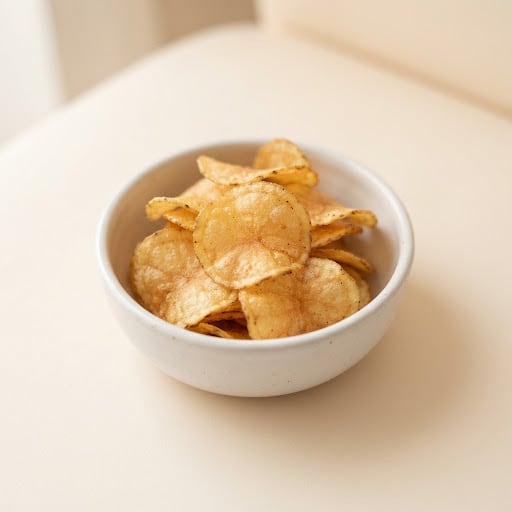
Chips are best saved until about 2 years old and then offered only as an occasional snack. Potato and tortilla chips are hard, sharp and high in salt, and they are a common choking hazard for babies and young toddlers. Before 2, crushed chips can be used as a small topping that softens in moist food.
How to serve chips by age
Shapes and textures change as your baby’s grasp and chewing grow.

6 months
Skip chips at this age. Babies at 6 months are only ready for smooth purees and mashes on a spoon, so offer smooth savory foods like mashed potato or sweet potato instead.

7–8 months
Chips are still not recommended. For savory flavor and a little texture, offer soft roasted potato or sweet potato wedges that squash easily, or lumpy mashed beans, and if chips are part of a family dish, crush a small amount into fine crumbs and stir them into a moist food until fully soft.

9–12 months
Chips are still best avoided as finger food because the hard, sharp pieces can break into shards. Offer soft, savory foods instead, such as roasted potato wedges, baked sweet potato fries or a strip of soft tortilla.

12 months +
Between 1 and 2, keep chips to crushed crumbs softened in food. From about 2 years, offer a few thin, low-salt chips at a time while your child sits down, and model taking small bites and chewing well.
Why it’s good
Chips add little nutrition beyond energy from starch and fat. Many are high in sodium, and some contain added sugar, seasonings or acrylamide from high-heat frying. Roasted potatoes, baked tortilla strips or whole grains give the same flavors with more fiber and less salt.
Safety notes
- Chips are hard and break into sharp pieces that can lodge in the throat. Wait until about 2 years before offering whole chips as a snack.
- Always serve chips with your child sitting upright and supervised, never in the car, while walking or while playing.
- Most chips are high in salt. Choose unsalted or lightly salted chips and keep portions to a small handful for toddlers.
- Check the label: flavored chips can contain milk, wheat, soy, fish or other allergens, plus very spicy seasonings.
- Tortilla chips, pita chips and veggie chips carry the same choking risk as potato chips. Veggie chips are not meaningfully healthier.
A low-allergy food, still worth watching
Plain potato or corn chips are not a common allergen, but flavored and specialty chips can contain dairy, wheat, soy, sesame or fish. Read the label every time, and introduce those allergens separately in simpler foods first.
Chips for babies: questions parents ask
Quick answers about chips for babies and toddlers.
When can babies have chips?
Babies and toddlers can have chips from about 2 years old as an occasional snack. Before then, chips are a choking hazard and high in salt, so offer soft savory foods instead or crush chips finely into moist dishes.
Can babies have chips?
Babies should not eat whole chips as a snack, because the hard, sharp pieces are a choking hazard. A small amount of crushed chips softened in soup or beans is fine, but chips are not a necessary food for babies.
Are chips a choking hazard for babies?
Yes, chips are a common choking hazard for babies and toddlers. Chips are hard and crunchy, and they break into sharp fragments that can get stuck in the airway, so wait until about 2 years for whole chips.
Are chips a common allergen?
Plain chips are not a common allergen, but many flavored chips contain common allergens like milk, wheat, soy or sesame. Read the ingredient list and allergy statement before sharing chips with a toddler.
How do I serve chips to a 6 month old?
Chips are not recommended for a 6 month old. At this age, offer smooth savory foods like mashed potato or sweet potato on a spoon instead. Soft roasted potato wedges that squash easily can follow at 7–8 months.
Are veggie chips or puffs healthier for babies?
Veggie chips are usually made mostly of potato or flour with vegetable powder, so they are not much healthier than regular chips. Puffs made for babies dissolve quickly in the mouth and are a different texture, but still offer them in small amounts.
Are baked chips safe for babies?
Baked chips are lower in fat but are still hard, crunchy and often salty, so baked chips carry the same choking risk as fried chips. Wait until about 2 years and offer just a few at a time.
How much salt is in chips?
Chips vary widely, but a single small bag of salted chips can contain a large share of a toddler's daily sodium limit. Choose unsalted or lightly salted chips and keep chips as an occasional food.
What can I give my baby instead of chips?
Instead of chips, babies from about 7–8 months can have soft oven-roasted potato wedges, baked sweet potato fries, strips of soft tortilla, soft toast fingers or puffed snacks made for babies. These give the same savory flavors without the sharp, hard crunch.
The takeaway
- Chips are best saved until about 2 years old and then offered only as an occasional snack.
- Between 1 and 2, keep chips to crushed crumbs softened in food.
- Choking risk is high. Not a Top 9 allergen, but offer a small amount first and watch for any reaction.
Read next

Sources
This guide follows current advice from these organizations.
- Starting Solid Foods American Academy of Pediatrics (HealthyChildren.org)
- When, What, and How to Introduce Solid Foods Centers for Disease Control and Prevention
- Choking Hazards Centers for Disease Control and Prevention
- Choking Prevention American Academy of Pediatrics (HealthyChildren.org)
- Foods and Drinks to Avoid or Limit Centers for Disease Control and Prevention
Track every new food in your baby’s passport
Track the first 100 foods and the Top 9 allergens. 7 days free.
More family foods for babies
Updated November 2026. Reviewed by our dietitians. Based on AAP, CDC and NIAID guidance. Written for healthy, full-term babies; not a substitute for your pediatrician. If your baby was born early, has a medical condition, feeding difficulties or a known allergy, check with them first (medical disclaimer). Always stay with your baby while they eat.