
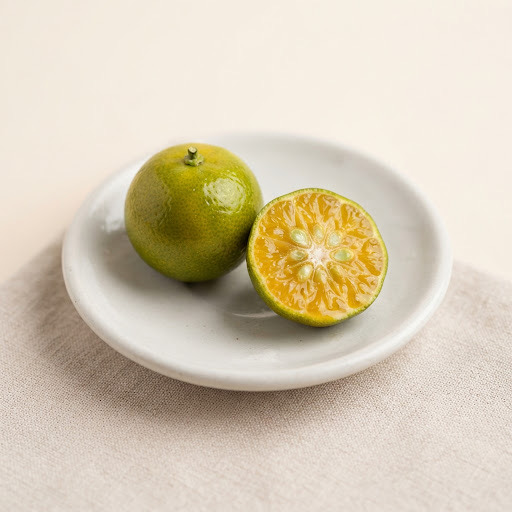
Fruit Food Library
When can babies have calamansi?
Can babies have calamansi?
Babies can have calamansi from 6 months, as a few drops of juice squeezed into their food. Calamansi is a small, very sour citrus fruit, so it works best as a flavor booster rather than a food on its own. Calamansi is not a common allergen, though its acid can cause a harmless red rash around the mouth.
How to serve calamansi by age
Shapes and textures change as your baby’s grasp and chewing grow.

6 months
Squeeze a few drops of calamansi juice into smooth purees like mashed avocado, steamed vegetable puree, pureed fish or beans, and offer them on a spoon. Remove every seed first, and expect a big sour face, which is normal and not a sign of dislike.

7–8 months
Keep squeezing a few drops of calamansi over thicker, lumpier mashes and soft foods like flaked fish or mashed lentils. Calamansi stays a seasoning at this age, so skip halves or wedges to suck.

9–12 months
Keep using calamansi as a seasoning on soft foods like mashed lentils, rice porridge or flaked fish. Remove every seed before squeezing, and keep halves and peel away from your baby.

12 months +
Toddlers can have calamansi squeezed over noodles, grilled chicken, rice dishes and fruit, or as homemade calamansi water made with a squeeze of juice in plain water, with no sweetener before age 2. Remove the seeds and skip store-bought calamansi drinks, which are usually high in sugar.
Why it’s good
Calamansi is rich in vitamin C, which supports the immune system and helps the body absorb iron from plant foods like beans, lentils, spinach and fortified cereals. Calamansi also offers small amounts of folate, potassium and plant compounds. Squeezing calamansi over an iron-rich meal is a simple way to get more out of that meal.
Safety notes
- Remove all seeds before offering calamansi. The seeds are small, slippery and bitter.
- Do not give a whole calamansi to a baby or young toddler. The fruit is round and about the size of a large grape, which makes it easier to lodge in the airway.
- Calamansi is very acidic. Redness or a rash around the mouth or in the diaper area is common with citrus and usually fades quickly; wipe the skin after meals.
- Do not offer calamansi juice as a drink before 12 months. After that, keep it diluted and avoid sweetened calamansi juices and concentrates.
- Wash the fruit well before cutting, since the peel touches the juice and may be handled by your baby.
A low-allergy food, still worth watching
Calamansi is not a common allergen, and true citrus allergy is uncommon in babies. Redness on the cheeks or chin after citrus is usually contact irritation from the acid, but call your pediatrician if you see hives spreading beyond the mouth, swelling, vomiting or breathing trouble.
Calamansi for babies: questions parents ask
Quick answers about calamansi for babies and toddlers.
When can babies have calamansi?
Babies can have calamansi from 6 months, once they are ready for solids. Calamansi works best as a squeeze of juice over other foods, because the fruit is very sour and the seeds and peel are hard to manage.
Can babies have calamansi?
Yes, babies can eat calamansi from 6 months in small amounts. Calamansi is a strong, tart citrus, so most families use it to season vegetables, fish, rice and beans rather than serving it as a fruit on its own.
Is calamansi a choking hazard for babies?
Calamansi is a low choking risk when the seeds are removed and the fruit is cut in half or squeezed over food. A whole calamansi is round and grape-sized, so never offer it whole to a baby or young toddler.
Is calamansi a common allergen?
Calamansi is not a common allergen. Citrus acid can cause harmless redness around the mouth, and children with pollen allergies may rarely notice an itchy mouth from citrus, so watch your baby the first few times.
How do I serve calamansi to a 6 month old?
To serve calamansi to a 6 month old, squeeze a few drops of juice into a smooth food like mashed avocado or pureed fish and offer it on a spoon. Calamansi is a flavor here, not a meal, and it stays a seasoning in lumpier mashes at 7–8 months.
When can babies drink calamansi juice?
Babies can have calamansi juice as a drink after 12 months, ideally a squeeze of fresh calamansi in plain water, unsweetened before age 2. Before 12 months, babies should not have juice of any kind, though a few drops on food are fine.
Does calamansi help with iron absorption?
Yes, calamansi helps with iron absorption because its vitamin C makes plant iron easier for the body to take up. Squeezing calamansi over beans, lentils, tofu, spinach or iron-fortified cereal is an easy habit for babies who eat little meat.
Why does my baby get a rash from calamansi?
A red rash around the mouth after calamansi is usually caused by the acid irritating sensitive skin, not an allergy. The rash typically fades within an hour; applying a thin layer of barrier cream before meals and wiping the face afterwards can help.
Is calamansi peel safe for babies?
Calamansi peel is thin and edible, but it is bitter and can come off in chewy strips, so keep it away from babies. Toddlers can have finely grated zest in food rather than chunks of peel.
The takeaway
- Babies can have calamansi from 6 months, as a few drops of juice squeezed into their food.
- Squeeze a few drops of calamansi juice into smooth purees like mashed avocado, steamed vegetable puree, pureed fish or beans, and offer them on a spoon.
- Choking risk is low. Not a Top 9 allergen, but offer a small amount first and watch for any reaction.
Read next



Sources
This guide follows current advice from these organizations.
- Starting Solid Foods American Academy of Pediatrics (HealthyChildren.org)
- When, What, and How to Introduce Solid Foods Centers for Disease Control and Prevention
- Choking Hazards Centers for Disease Control and Prevention
Track every new food in your baby’s passport
Track the first 100 foods and the Top 9 allergens. 7 days free.
More fruit for babies


Updated November 2026. Reviewed by our dietitians. Based on AAP, CDC and NIAID guidance. Written for healthy, full-term babies; not a substitute for your pediatrician. If your baby was born early, has a medical condition, feeding difficulties or a known allergy, check with them first (medical disclaimer). Always stay with your baby while they eat.