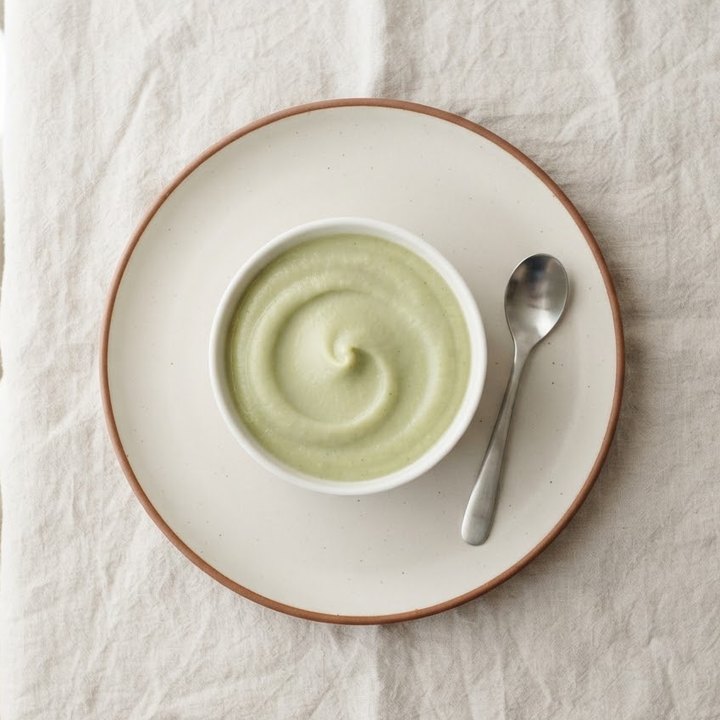
Prune Purée for Baby
Pitted prunes simmered soft and blended smooth. A teaspoon or two stirred into oatmeal or another purée may help soften hard stools.

Ingredients
Makes about 1 cup
Foods in this recipe
Find it in these collections
Method
- 1
Check every prune for stones, then put them in a small pan with the water.
- 2
Bring to a simmer and cook 8–10 minutes, until plump and very soft.
- 3
Blend the prunes with the cooking liquid until completely smooth. Add water a spoon at a time for a thinner purée.
- 4
Cool to lukewarm and check the temperature before serving.
Serve it by age
6 months
Stir 1–2 tsp into baby cereal, oatmeal or another fruit purée. Start small: prunes are strong.
7–8 months
Swirl a spoonful into thicker oatmeal or plain whole-milk yogurt (contains milk).
9–12 months
Spread a thin layer on toast fingers (contains wheat), or keep stirring it into oatmeal and plain yogurt (contains milk).
health_and_safetyAllergens
The purée itself has none of the top 9 allergens. Serving ideas: yogurt contains milk and toast contains wheat; offer those only after each has been introduced on its own (small amount, early in the day, watch for 2 hours).
sync_altSwaps
- swap_horizBlend half prune, half pear purée for a milder taste.
- swap_horizUse dried apricots (no added sulfites or sugar) the same way.
kitchenStorage
Fridge up to 3 days in a covered jar. Freeze in ice cube trays, then bag, up to 3 months.
Safety reminders
- No added salt, sugar or honey before 12 months.
- At 6 months, blend until completely smooth with no lumps or skins; move on to thicker, lumpier textures over the next few weeks.
- Stay with your baby and keep them seated upright while eating.
- Too much prune can cause loose stools, so start with 1–2 teaspoons a day. From 6 months, also offer small sips of water from an open cup with meals.
- Call your pediatrician if your baby has hard stools for more than a few days, seems to be in pain, has blood in the stool, a swollen tummy, vomiting, or is not feeding well.
- This recipe is general guidance for healthy, full-term babies and children. Ask your pediatrician first if your child was born early, has a medical condition, allergies or feeding difficulties (medical disclaimer).