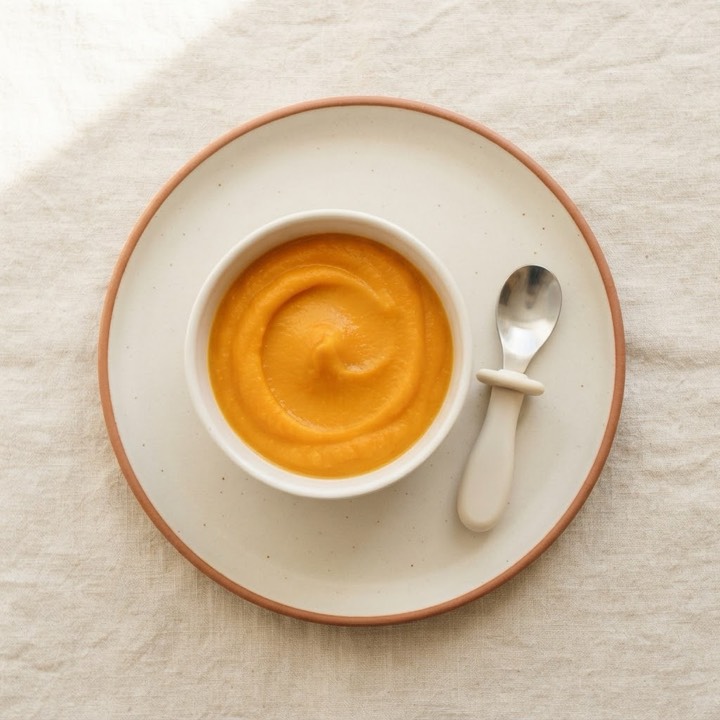
Butternut Squash Pastina for Baby
Tiny star or orzo pasta cooked very soft and stirred into silky butternut squash. A gentle first way to introduce wheat.

Passport6 mo+recipe
Ingredients
Makes 2 baby servings
Stamps in this recipe
Adds 2 stamps to your baby's food passport.
Method
- 1
Steam the squash for 12–15 minutes until it is very soft. Mash or blend until smooth.
- 2
Cook the pastina in unsalted water 2 minutes longer than the pack says, so it is very soft. Drain.
- 3
Stir the pastina and olive oil into the squash. For a first taste at 6 months, blend everything smooth.
- 4
Thin with water, breast milk or formula. Cool to lukewarm before serving.
Reviewed by our dietitians
Textures, serving sizes, allergens and choking safety follow AAP, CDC, NIAID & NHS guidance for babies and toddlers.
Serve it by age
6 months
Blend the pastina into the squash until smooth. For the first wheat taste, offer a small spoonful early in the day.
7–8 months
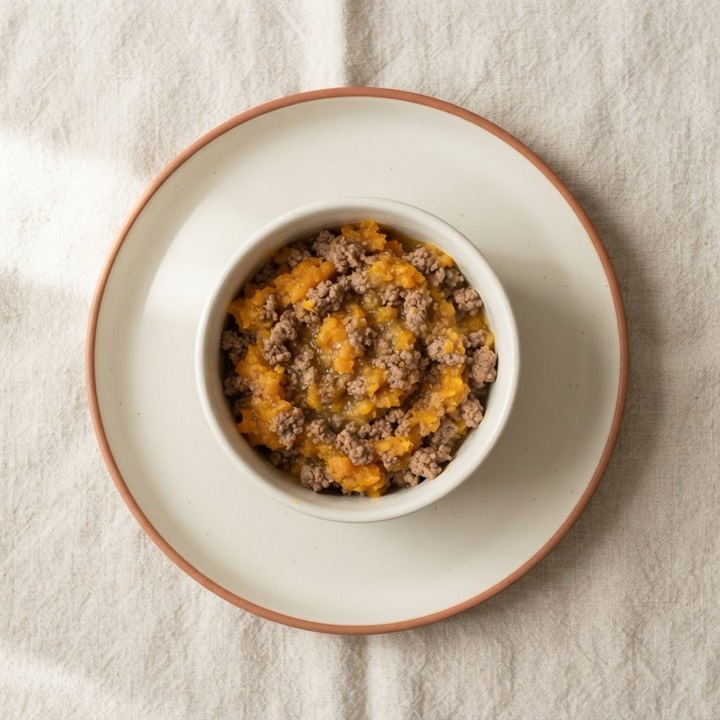
Leave the soft pastina whole in a thick squash base. Offer from a preloaded spoon.
9–12 months
Serve thicker, with a few soft squash cubes on the side to pick up.
Allergens
Contains wheat. If this is your baby's first wheat, offer a small amount early in the day and watch for 2 hours. Once tolerated, keep wheat in the diet 2–3 times a week.
Swaps
- No butternut squash? Use sweet potato.
- Any tiny pasta works: stars, orzo, ditalini or broken spaghetti.
Storage
Fridge 1–2 days. The pasta keeps soaking up liquid, so add a splash of water when reheating. Freeze up to 2 months. For batches you plan to freeze, thin with water and stir in breast milk or formula when you serve each portion. Reheat once to 165°F (74°C) and stir well. Throw away anything your baby ate from directly.
Safety reminders
- No added salt or honey before 12 months, and no added sugar before age 2.
- At 6 months, blend until completely smooth with no lumps or skins; move on to thicker, lumpier textures over the next few weeks.
- Stay with your baby and keep them seated upright while eating.
- This recipe is general guidance for healthy, full-term babies and children. Ask your pediatrician first if your child was born early, has a medical condition, allergies or feeding difficulties (medical disclaimer).