
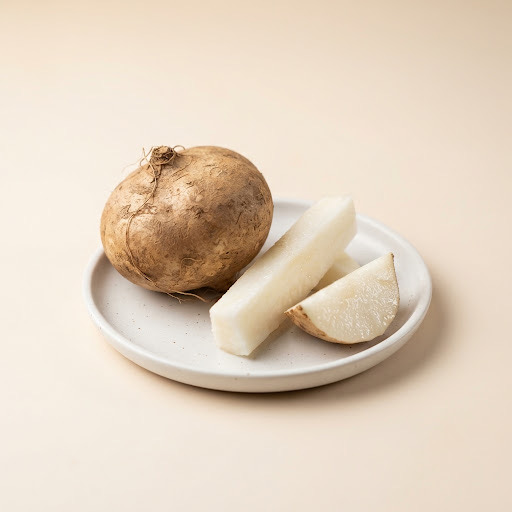
Veggies Food Library
When can babies have jicama?
Can babies have jicama?
Babies can have jicama from about 6 months when it is peeled and cooked until soft, blended smooth at first and offered as soft cooked sticks from about 7–8 months. Raw jicama is hard and crunchy, so small raw pieces are a choking hazard; grate it finely if you serve it raw. Jicama is not a common allergen.
How to serve jicama by age
Shapes and textures change as your baby’s grasp and chewing grow.

6 months
Peel jicama fully, dice it and steam or boil until a fork slides in easily, then blend it into a smooth puree on its own or with pear, apple or sweet potato. Offer it on a spoon, and do not give raw jicama at this age.

7–8 months
Mash soft cooked jicama with a fork, or offer steamed sticks about the size of an adult finger that squash easily between your thumb and finger. Raw jicama can be grated very finely and stirred into yogurt or mashed fruit.

9–12 months
Serve small pieces of cooked, soft jicama, or grate raw jicama very finely and mix it into slaws or yogurt dips. Avoid raw chunks.

12 months +
Keep jicama cooked, finely grated or very thinly sliced for young toddlers. Raw jicama sticks are best saved until your child chews well, often closer to age 4.
Why it’s good
Jicama gives babies vitamin C, fiber and a little potassium with few calories. Its prebiotic fiber feeds healthy gut bacteria, and its mild, sweet taste makes it an easy vegetable to like.
Safety notes
- Raw jicama is hard and crunchy, like raw carrot. Small raw pieces can break off and block the airway, so cook it soft or grate it finely.
- Peel jicama fully. Only the root flesh is eaten; the skin, leaves, stems and seeds of the jicama plant are toxic.
- Do not offer raw jicama sticks for teething. Raw pieces can break off, so serve jicama cooked soft or finely grated.
- Jicama slaws often include chili-lime seasoning, which can be salty. Use plain lime juice for babies.
A low-allergy food, still worth watching
Jicama is not a Top 9 allergen, and allergic reactions are rare. Offer a small amount the first time and watch for hives, itchy mouth or swelling.
Jicama for babies: questions parents ask
Quick answers about jicama for babies and toddlers.
When can babies have jicama?
Babies can have jicama from about 6 months when it is cooked until soft and blended or mashed. Raw jicama should be grated finely before serving.
Can babies have raw jicama?
Babies should not eat small pieces of raw jicama because it is hard and crunchy. Finely grated raw jicama is fine, and raw sticks can wait until a child chews well.
Is jicama a choking hazard for babies?
Yes, jicama is a choking hazard when raw and cut into small pieces or sticks. Cooking jicama until soft, or grating it finely, makes it much safer for babies.
Is jicama a common allergen?
No, jicama is not a common allergen. Allergic reactions to jicama are rare.
How do I serve jicama to a 6 month old?
To serve jicama to a 6 month old, peel it fully, steam or boil it until very soft, and blend it into a smooth puree, alone or with pear or sweet potato. Offer it on a spoon once cooled. Soft cooked finger-size sticks can follow at 7–8 months.
Can you cook jicama?
Yes, jicama can be steamed, roasted, boiled or sauteed. Cooked jicama stays slightly crisp longer than potato, so cook it until it is truly soft before giving it to a baby.
Is jicama skin safe to eat?
No, jicama skin should not be eaten. The skin and other parts of the jicama plant contain a natural toxin, so peel jicama completely and serve only the white flesh.
Can jicama help babies poop?
Jicama has fiber and lots of water, which can help keep stools soft. Offer jicama with water at meals as part of a varied diet.
The takeaway
- Babies can have jicama from about 6 months when it is peeled and cooked until soft, blended smooth at first and offered as soft cooked sticks from about 7–8 months.
- Peel jicama fully, dice it and steam or boil until a fork slides in easily, then blend it into a smooth puree on its own or with pear, apple or sweet potato.
- Choking risk is high. Not a Top 9 allergen, but offer a small amount first and watch for any reaction.
Read next

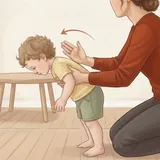

Sources
This guide follows current advice from these organizations.
- Starting Solid Foods American Academy of Pediatrics (HealthyChildren.org)
- When, What, and How to Introduce Solid Foods Centers for Disease Control and Prevention
- Choking Hazards Centers for Disease Control and Prevention
- Choking Prevention American Academy of Pediatrics (HealthyChildren.org)
Track every new food in your baby’s passport
Track the first 100 foods and the Top 9 allergens. 7 days free.
More vegetables for babies
Updated November 2026. Reviewed by our dietitians. Based on AAP, CDC and NIAID guidance. Written for healthy, full-term babies; not a substitute for your pediatrician. If your baby was born early, has a medical condition, feeding difficulties or a known allergy, check with them first (medical disclaimer). Always stay with your baby while they eat.