Breast Milk Popsicles for Teething
How to make breast milk popsicles to soothe teething gums. Safe storage rules, the right molds and when to offer them.
Passport6 mo+recipe
Ingredients
Makes 4 small popsicles
Method
- 1
Use freshly expressed or refrigerated breast milk. Do not refreeze milk that has already been frozen and thawed.
- 2
Stir in the fruit purée if using.
- 3
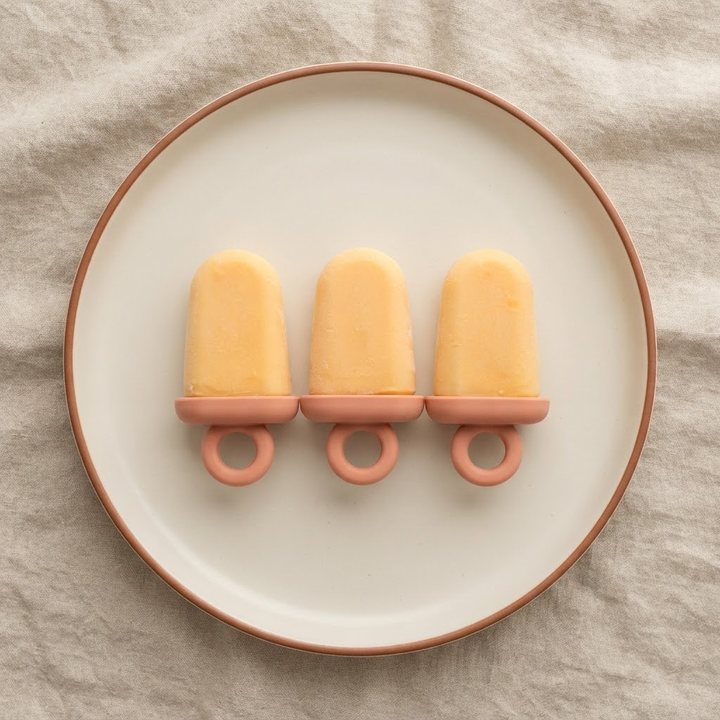
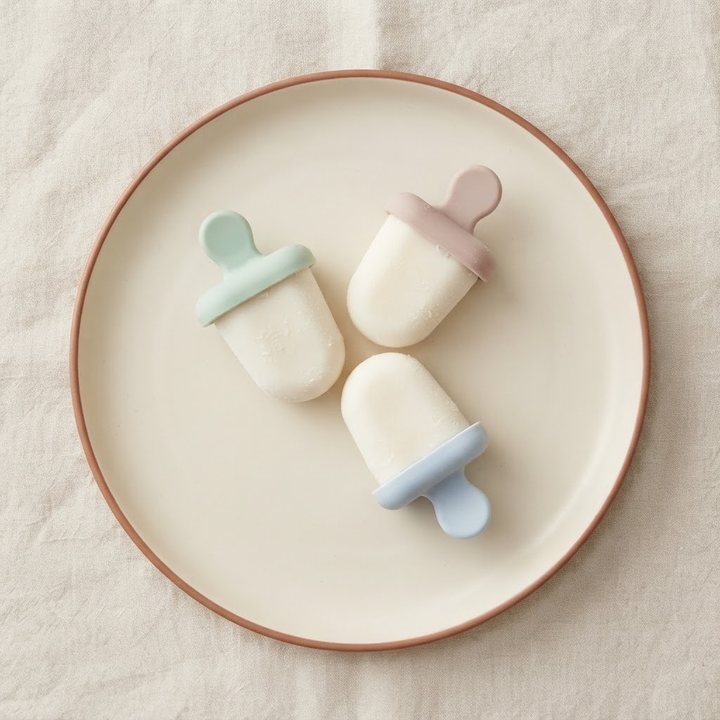
Pour into small baby popsicle molds with wide handles, leaving a little room for expansion.
- 4
Freeze for at least 4 hours. Label with the date the milk was expressed.
Reviewed by our dietitians
Textures, serving sizes, allergens and choking safety follow AAP, CDC, NIAID & NHS guidance for babies and toddlers.
Serve it by age
6 months
Offer for a few minutes while baby is seated upright. Hold it with them at first. It counts as milk, not as a solid meal.
7–8 months
Baby holds the handle. Remove any large piece that breaks off.
9–12 months
As above; add fruit purée for new flavors.
12 months+
Use whole milk or yogurt in place of breast milk if you prefer.
Allergens
Plain breast milk pops contain no added allergens. The yogurt swap and the 12 months+ idea add milk; offer them only after milk has been introduced.
Swaps
- No breast milk? Blend 2–3 tbsp fruit purée with plain whole-milk yogurt once milk has been introduced. We don't recommend freezing prepared formula.
Storage
Freeze and use within 1 month for best quality; never refreeze a partly eaten pop.
Safety reminders
- No added salt or honey before 12 months, and no added sugar before age 2.
- Check that food squashes easily between your thumb and finger.
- Supervise closely and keep your baby upright while eating.
- This recipe is general guidance for healthy, full-term babies and children. Ask your pediatrician first if your child was born early, has a medical condition, allergies or feeding difficulties (medical disclaimer).