
Dairy Food Library
When can babies have half-and-half?
Can babies have half-and-half?
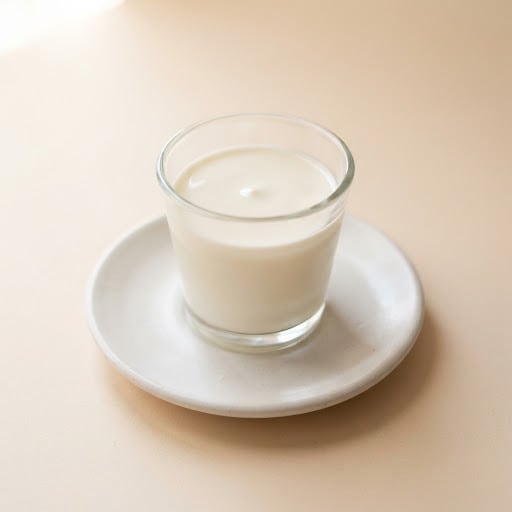
Babies can have half-and-half from about 6 months when it is pasteurized and cooked into foods like oatmeal, eggs or sauces. Half-and-half should not be given as a drink before 12 months, and it should never replace breast milk or formula. It is made from milk and cream, so it is a dairy allergen.
How to serve half-and-half by age
Shapes and textures change as your baby’s grasp and chewing grow.

6 months
Stir a splash of pasteurized half-and-half into smooth oatmeal, iron-fortified cereal, mashed potatoes or vegetable purees to add creaminess and calories, and offer it on a spoon. Keep it as an ingredient, not a drink.

7–8 months
Keep adding a splash of half-and-half to thicker, lumpier foods like fork-mashed vegetables, oatmeal or soft scrambled eggs. It stays an ingredient only; breast milk or formula is still the drink.

9–12 months
Use half-and-half in soft family foods like creamy pasta sauces, egg custards, soups and baked goods. Offer water in a cup to drink with meals.

12 months +
Toddlers can have foods made with half-and-half, but it is too rich to replace whole milk as a drink. Skip flavored or sweetened coffee creamers, which are a different product.
Why it’s good
Half-and-half adds fat and calories, plus calcium, vitamin A, vitamin B12 and some protein, which can help babies who need extra energy. Fat supports brain growth, but half-and-half can fill a small tummy quickly, so use it in small amounts within meals.
Safety notes
- Do not offer half-and-half as a drink before 12 months. Cow's milk products should not replace breast milk or formula in the first year.
- Only use pasteurized half-and-half. Raw milk and cream can carry harmful bacteria such as Listeria, E. coli and Salmonella.
- Avoid flavored coffee creamers and non-dairy creamers, which often contain added sugar, oils and additives.
- Keep half-and-half refrigerated and use it by the date on the carton. Throw it out if it smells sour or curdles.
- Use small amounts. Too much rich dairy can crowd out iron-rich foods and may cause loose stools in some babies.
Introduce half-and-half on its own, then keep it in
Half-and-half is made from milk and cream, and dairy is one of the Top 9 allergens. Start with a small amount in food and watch for hives, vomiting, swelling, coughing or wheezing, and talk to your pediatrician first if your baby has eczema or a known allergy.
Half-and-half for babies: questions parents ask
Quick answers about half-and-half for babies and toddlers.
When can babies have half-and-half?
Babies can have half-and-half from about 6 months as an ingredient cooked into food. Half-and-half should not be served as a drink until after 12 months, and even then whole milk is the better drink.
Can babies drink half-and-half?
No, babies should not drink half-and-half. Before 12 months, breast milk or formula should be the main drink, and half-and-half is too rich to serve as a drink for toddlers.
Is half-and-half a choking hazard for babies?
No, half-and-half is not a choking hazard because it is a liquid. The foods you mix half-and-half into should still be soft and served in age-appropriate shapes.
Is half-and-half a common allergen?
Yes, half-and-half is a common allergen because it is made from milk and cream, and dairy is one of the Top 9 allergens. Introduce half-and-half in a small amount and watch for signs of a reaction.
How do I serve half-and-half to a 6 month old?
To serve half-and-half to a 6 month old, stir a small splash into a smooth cooked food like oatmeal or mashed sweet potato and offer it on a spoon. Half-and-half makes foods creamier and adds energy for growing babies.
Can I use half-and-half instead of whole milk for my toddler?
Half-and-half is not a good swap for whole milk as a toddler drink because it has much more fat and less protein per sip. Use half-and-half in cooking and offer whole milk or water to drink.
Can babies have coffee creamer?
No, babies should not have coffee creamer. Flavored and non-dairy coffee creamers are not the same as half-and-half and often contain added sugar, oils and additives.
Can half-and-half cause tummy upset in babies?
Large amounts of half-and-half can cause loose stools or tummy upset in some babies because it is rich in fat. Keep half-and-half to small amounts mixed into food.
The takeaway
- Babies can have half-and-half from about 6 months when it is pasteurized and cooked into foods like oatmeal, eggs or sauces.
- Stir a splash of pasteurized half-and-half into smooth oatmeal, iron-fortified cereal, mashed potatoes or vegetable purees to add creaminess and calories, and offer it on a spoon.
- Choking risk is low. Dairy is one of the Top 9 allergens: offer a small amount first, watch for a reaction, then keep it in the diet regularly.
Read next


Sources
This guide follows current advice from these organizations.
- Starting Solid Foods American Academy of Pediatrics (HealthyChildren.org)
- When, What, and How to Introduce Solid Foods Centers for Disease Control and Prevention
- Choking Hazards Centers for Disease Control and Prevention
- Foods and Drinks to Avoid or Limit Centers for Disease Control and Prevention
- Preventing Listeria Infection Centers for Disease Control and Prevention
- Dietary Guidelines for Americans, 2020-2025 U.S. Department of Agriculture and HHS
- The Effects of Early Nutritional Interventions on the Development of Atopic Disease in Infants and Children Greer FR, Sicherer SH, Burks AW; American Academy of Pediatrics. Pediatrics. 2019;143(4):e20190281
Track every new food in your baby’s passport
Track the first 100 foods and the Top 9 allergens. 7 days free.
More dairy foods for babies
Updated November 2026. Reviewed by our dietitians. Based on AAP, CDC and NIAID guidance. Written for healthy, full-term babies; not a substitute for your pediatrician. If your baby was born early, has a medical condition, feeding difficulties or a known allergy, check with them first (medical disclaimer). Always stay with your baby while they eat.